I haven't kept up with Artemis development but I've read extensively about Challenger and Columbia. These two parts of the article stood out to me:
> Moon-to-Mars Deputy Administrator Amit Kshatriya said: “it was very small localized areas. Interestingly, it would be much easier for us to analyze if we had larger chunks and it was more defined”. A Lockheed Martin representative on the same call added that "there was a healthy margin remaining of that virgin Avcoat. So it wasn’t like there were large, large chunks.”
Followed by:
> The Avcoat material is not designed to come out in chunks. It is supposed to char and flake off smoothly, maintaining the overall contours of the heat shield.
This is echoes both Shuttle incidents. Challenger: no gasses were supposed to make it past the o-rings no matter what, but when it became clear that gasses were escaping and the o-rings were being damaged, there was a push to suggest that it's an acceptable level.
There was a similar situation with heat shield damage and Columbia.
In both cases some models were used to justify the decision, with wild extrapolations and fundamentally, a design that wasn't expected to fail in that mode /at all/.
I know the points that astronauts make about the importance of manned space exploration, but I agree with this author that it seems to make sense to run this as an unmanned mission, and probably test the new heat shield which will replace the Artemis II design in an unmanned re-entry as well.
"The Challenger accident was not caused by O-rings or temperature on the day of launch; it was caused by a deviant joint design which opened instead of closed when loaded. It was caused by mistaking analytical adequacy of a simplified test for physical understanding of the system. The solution, post Challenger, was the structural redesign of the SRB field joint and the use of the exact same O-rings."
I find that highly surprising, because "it was the O-rings" explanation seems universally believed and sanctified by no lesser authority than the Nobel prize laureate Richard Feynman.
It's the same explaination. When the SRB joints flexxed the o-rings were meant to stay in place, but the joints were defective and NASA knew the o-rings were moving. However NASA also believed the o-rings could still take the abuse, because although they were moving they were getting shoved deeper into the joint, in a way that wasn't intended but was nonetheless at least marginally effective at stopping exhaust blow-by shortly after it began. But when the o-rings were cold and stiff... they didn't move the same way, exhaust blew by them longer and cut right through. At that point the SRB turns into a cutting torch (the SRBs didn't actually explode until after the shuttle broke up and range safety sent the signal to kill the boosters.
What would happen "normally" (i.e. the normalization of deviance) was that the rotation (from the SRB joints bowing--essentially "ballooning") would create a gap, and the O-rings would get blown into that gap and ultimately seal in there
With Challenger, it was too cold, so the O-ring rubber was not malleable enough to seal into that space (like the O-ring towards the right of the diagram), so the hot gases were allowed to blow by and erode the O-ring. If they had sealed in (like the one on the left) it would have just taken the pressure but not worn away
Let's examine a slice of the booster. Going vertically you have one segment, then the joint, then the next segment. The O-rings were in that joint and had some ability to move horizontally.
As designed the joint would always be in compression, the O-rings sandwiched between two big pieces of metal. If they moved horizontally in the space they had it made no difference, their job was simply to keep the 1000psi inside the booster inside it. Going inward there was a layer of putty that could stand up to the heat but was useless for sealing.
Unfortunately, when the engines lit the whole booster stack twanged a few inches. A joint meant to always be in compression was suddenly for a moment in tension--the two pieces of metal moved slightly apart--gas could now go above/below the ring. If the rings were pliable enough they got slammed against the outside of their groove where the pressure against the joint stopped the escape of gas--examination of the boosters showed blow-by but it cut off soon enough that the mass of metal was enough to absorb enough heat to avoid catastrophe.
But that night was very cold. And it was very calm--the boil-off from the LOX tank was simply dumped overboard and the booster that failed was downwind. The point of maximum chilling was between the booster and the tank, the lowest segment joint got the worst of it. And that's where it failed.
When the stack twanged the ring didn't slam against the outside quite fast enough--some exhaust leaked past and tore up the ring. But the gas still had to go out the joint--and the shuttle fuel used aluminum. The ring wasn't sealing the joint but enough aluminum solidified out against the still-cold metal of the joint that it sealed the gap and Challenger roared into the sky. But as it went faster and faster the vibrations grew stronger--and eventually the really sloppy weld let go. Even that didn't doom the mission, there was enough fuel to tolerate the pressure loss. But the leak was pointing at a strut and the tank with a whole bunch of LH2 in it. Neither was designed to stand up to that.
There was also a second failure that got little attention: the putty. As intended, it should have covered the entire gap, the force would have been evenly applied and it probably would have made it. But the putty was spread and the segments placed together--in atmosphere. Air was trapped and compressed--and the putty gave way letting it out. What had been an even layer now had holes in wherever the weakest spots were--and that concentrated the escaping gas from the booster. And why wasn't that caught? Because in the static testing someone had gone inside and made sure the putty job was good. Easy enough in a booster laying on it's side, but the Shuttle was stacked vertically.
>>I find that highly surprising, because "it was the O-rings" explanation seems universally believed and sanctified by no lesser authority than the Nobel prize laureate Richard Feynman.
Essentially you are mischaracterizing what Feynman did or say, although this is also Feynman fault :-), by doing the famous public demonstration, with the ice water in a glass [2], although even there he only said it has "significance to the problem...". In other words, we should not simplify, even for the general public, what are complex subtle engineering issues. This is also the reason why current AI, will fail spectacularly, but I digress...
Feynman documented the joint rotation problem in his written Appendix F, but his televised demonstration became the explanation...[3]
Camarda is correct here. There was a fundamentally flawed field joint design, meaning the tang-and-clevis joint opened under combustion pressure instead of closing. This meant the O-rings were being asked to chase a widening gap something the O-ring manufacturer explicitly told Thiokol O-rings were never designed to do. Joint rotation was known as early as 1977, a full nine years before the disaster.
The cold temperature made things worse by stiffening the rubber so it could not chase the gap as quickly, but O-ring erosion and blow-by were occurring on flights in warm weather too and nearly every flight in 1985 showed damage.
The proof is how they fixed. NASA redesigned the joint metal structure with a capture feature to prevent rotation, added a third O-ring for redundancy, and installed heaters but kept the exact same Viton rubber. If the O-rings were the real problem, you would change the O-rings. They did not need to.
The report [1] is public for everybody to read...but not from the NASA page... who funnily enough has a block on the link from their own page, so I had to find an alternative link...
Yeah--people don't get it that while it was the failure of the O-rings that doomed that flight that they failed because they were subjected to forces they were never designed to take. The fact that they got that many flights before it blew actually says they were doing an admirable job of covering up the design flaw.
Without being too familiar with the subject - another commenter referred to the "swiss cheese model": the O-ring design, the temperature etc. weren't the single cause, they were contributing factors, and the more contributing factors you eliminate, the more certain you can be that you won't have a repeat accident. AFAIK there weren't any more Shuttle launches at such low temperatures after that anymore either?
My recollection is that a rocket design was scaled up from one that worked, by people who didn't consider how an o-ring should be loaded in order to function properly. They inadvertently changed the design rather than simply scale it. I don't think Feynman got this wrong either. His demo was because the justifications for flight were based on the fact that failure had a temperature correlation, and they had a model representing how damaged the o-rings would be.
The o-ring failure was a measurable consequence of the joint design failure. The data behind the model didn't go down to temperatures as low as that at Challenger's launch date.
For more inappropriate extrapolation to justify a decision: the data for the heat shield tile loss model was based on much less damage than sustained by Columbia (3 orders of magnitude IIRC).
Now they are looking at the same style of fallacy and don't even have a model based on damage sustained in flights.
Another parallel I haven't seen discussed here yet, though I haven't read all comments: I recall Feynman feeling like he was on the investigation panel as a prop, that the intention of the investigation was to clear NASA of any wrongdoing. They used a model, considered risks, etc. Feynman recognized the need for a clear and powerful visual to cut through an information dump and pull it to front page news. The invitation of Camarda to a presentation with a pre-determined conclusion has the same feeling. I don't know what Camarda can do to put it on a (non-HN) front page today.
Using the same o-rings afterwards is surprising, I've heard that the manufacturer was surprised that they were being used for that purpose because they weren't rated for that.
Also I'm not sure the assertion is correct. If the sealant and O-Rings were adequate, the joint would not have failed. It was suboptimal, and increased risk, sure, but it in itself wasn't the reason for the accident. It was the joint and the o-rings in combination. The holes in the swiss cheese model lined up that day, and a lot of small problems combined into one big problem
>> Using the same o-rings afterwards is surprising, I've heard that the manufacturer was surprised that they were being used for that purpose because they weren't rated for that.
Surprised? One of the engineers was literally on the phone with NASA the morning of the disaster begging them not to launch. He was overruled by management.
Surprising for the management. If you are a spoiled brat who always got what it wanted if you just asked/cried you don't expect reality to come and hit you.
The engineering was clear: don't fly. But given political realities had they said that they probably would have lost the contract to build the rockets--and that was a big part of their business.
They made the human choice: chose the option with a chance of success vs the option that was a certain failure.
The sealant and O-rings were meant to keep the hot gasses inside. Simply making a joint slightly wiggly will not keep hot gasses inside. The hot gasses did not stay inside. The sealant and O-rings did not succeed in keeping the hot gasses inside (evidence: Challenger). They were not adequate
> The sealant and O-rings did not succeed in keeping the hot gasses inside (evidence: Challenger). They were not adequate
No. The whole assembly --joint, sealant and O-rings, -- failed.
"They were not adequate" - yet, after the redesign, they kept those same O-rings and declared that boosters are safe to fly, in manifest contradiction to your assertion. So your reasoning is clearly flawed.
>"They were not adequate" - yet, after the redesign, they kept those same O-rings
presumably "redesign" means some stuff changed. why is it not possible that the O-rings were inadequate for the old design, but adequate for the new design?
Exactly. They re-designed the tang and clevis joint so that the metal parts of the joint did not spread under gas pressure and the o-ring did not lose compression. They added a heater to ensure that the o-ring remained in it's usable temperature range. And added a superfluous third O-ring.
Speaking of which, has anyone ever adequately explained why Challenger's Right SRB joint temperature was measured as -13 deg C using infrared pyrometers, when the lowest ambient temperature that night was -5.5C, and the Left SRB was measured -4 C? What subcooled the right SRB?
Allan McDonald's "Truth, Lies, and O-Rings" is mandatory reading for anyone who wants to discuss the details of this particular bit of corporate and government malfeasance. It's 600 pages of technical detail and political intrigue. He suggests that a plume from a cryo vent could have impinged on the field joint and cooled the o-ring to lower than ambient temperatures. No proof though.
>why is it not possible that the O-rings were inadequate for the old design, but adequate for the new design?
Boneheads getting lucky, happens to the worst of them more often than lots of people want to admit :\
I came from Florida and am not a fan of cold weather.
That morning of course nobody knew about defective engineering at NASA contractors when it comes to o-rings. I got in to work, and the office people had turned on the seldom-used little black & white TV in the office manager's room so they could watch the Challenger launch. That was about the only time anybody watched TV at work, except for baseball playoffs when they occasionally occur in the afternoon.
It was 19 Fahrenheit at the launch site so I never thought for a minute that they would go through with it. It was simple common sense. You don't even try anything "normal" during the one day per decade when it gets that cold, and that would be in north Florida. You wait years for it to get below freezing at 32 F, especially on the central Florida Atlantic coast. And no matter what, you never have to wait long for it to get above freezing. I just naturally couldn't imagine anyone not fully on board with living to wear shorts another day. I was thinking about the rubber seals that must be there to keep the crew hatches airtight, for one thing, but aware there were countless other variables which I didn't have a clue about that could also be cold sensitive, like electronics.
I went into the back where my lab office was, thinking they were surely going to delay the launch, at least to later in the day. I didn't get back to the front office until a little after liftoff time, where I expected to find out how much of a delay or reschedule there was. It was very quiet. I asked what happened and they said "it blew up!" I actually thought they were kidding me because I missed the liftoff. Then I saw the tragic replay that was enough to make anybody sick.
Eventually, the o-rings were pointed to, and publicly disclosed and it was stupidly worse than I imagined.
A few years earlier I had experienced a dramatic o-ring blowout on some high-pressure apparatus that one of our engineers had designed at a previous employer. That was an engineering lab, and I'm no engineer but it turned out they needed more help than just chemistry lessons for experiment design. Since I was the one who had taken a reading within the blast zone minutes before I went back to my desk, I took over the redesign of the heavy-walled high-pressure custom cylinders, going over every little thing from alloy properties, dimensional characteristics, reinforced thread strength, etc. It was helpful that I had worked in a machine shop before, but I was the only one there who had any full time experience at metal fabrication. Well constant overtime really. When I got to the critical o-ring design parameters, that alone required more engineering effort than the rest of the project. Each standard o-ring has its own precision design parameters, highly dependent on the durometer hardness of the rubber among many other things.
Without considering durometer, here's a very simplified chart of some key parameters (primarily US inch units):
Never did look into the Challenger o-rings this much until now, all I knew was that defective o-ring design is more likely than not, and you would be a fool to use any o-ring that was not standard size without the equivalent of decades of destructive testing yourself.
All I needed to know was these o-rings circled the entire booster, so that alone was a no-no since it was nowhere near standard. Now in the clearthinking article I see the nominal measurements, 38 feet in circumference but only 1/4 inch thick. Yikes, what were they thinking? No wonder they used two o-rings, it was plain to see that one would never be enough :\
Look back at the d2t1xqejof9utc.cloudfront chart. Notice that a 1/4 inch thick o-ring is not expected to have nominal reliability outside the tolerances listed.
Notice the Groove depth and the gland depth are two different things but actually need to be as close as you can get in practice, within 3 thousandths of an inch altogether across the entire (38 foot!) diameter, or half of that when measured at any one point on the arc. This requires some precision machining and quite rigid metal substrates or it will never come true. This is precise enough that large temperature swings would always be a factor, but more so the greater the diameter of the substrate. And the maximum eccentricity of the groove relative to its substrate must be within 0.005 inch. The widest tolerance on this little chart is the "squeeze" of the rubber to be between 0.040 and 0.055 which is not for the machine shop but depends on the o-ring thickness being within its own design specifications. Not surprised to find out they were Viton rubber which is widely known to be some of the most chemically resistant for a non-teflon compound. Probably would have been better if Thiokol also was aware how "good" Viton is for its intended purpose, strong resilience at temperatures 200 F and above, below which it doesn't seal as well as ordinary rubber. Viton is just too hard and non-tacky at room temperature by comparison.
After all these decades, now I'm even more convinced it was always an accident waiting to happen :(
Both things can be true. A better O-ring with the same joint might have prevented the disaster. A better designed joint with the same O-ring might also. Feynman knew that a little theater would go a long way. The O-ring explanation, albeit a partial explanation, made for good theater.
Yes and the reversal of safety calculations really surprised me. "The orbiter has a total fail rate of one in 1000 so this individual part is higher than 1 in 10000", something like that. Where neither premise was actually tested or verified. Just specified on paper as a requirement and then used for actual safety calculations.
I don't know how a big organisation can think like that. But I guess these calculations were ones out of millions of ones made for the project.
The bigger an organization gets, the more internal overhead it has. At some point, it would take divine intervention for important things not to get overlooked or lost at some junctions in the org chart.
I've often thought world leaders, upon election/selection, should get a free few orbits of the earth, to give them some perspective on the job they're about to undertake. Maybe offer the first one on Artemis II, a deferred one for the current US administration?
James May of Top Gear has flown with a U2 spy plane once [0][1]. When they reached to the edge of space, May said "If everybody could do that once, it would completely change the face of global politics, religion, education, everything".
I can't agree more.
Another thing I believe needs to be watched periodically is Pale Blue Dot [2].
I think you overestimate the effect that would have on the kind of people that most need that sort of humility.
Look at what happened with William Shatner and Jeff Bezos when they came back from space. Shatner started to say something about what an impactful experience it was, but Bezos cut him off and was like “Woo! Partay!” and switched his attention to a magnum of champagne.
I met someone a couple years ago who was a U2 pilot (which are still in active service). He'd flown F-16s until he reached the point in the promotion ladder where flying stopped, then switched to U2s to keep being a pilot. After hitting 20 years, he was taking his retirement and training to fly Grumman S-2Ts with CAL FIRE.
Very down-to-earth guy who knew what he wanted and made his choices. Didn't at all seem like the sort to find edge-of-the-atmosphere flying a mystical experience.
Jeff went up two flights earlier, in July 2021 on NS-16. Shatner was on NS-18 in October.
I don't know if it's a thing that wears off, if Bezos was just in business-mode the entire time, or just didn't want someone monologuing right after getting back.
>I've often thought world leaders, upon election/selection, should get a free few orbits of the earth, to give them some perspective on the job they're about to undertake.
Perhaps, but they should also get a few free orbits of the Earth *after* their term ends, on a launch system built by whichever contractor has given the most "campaign donations" to politicians. Surely they'll trust it to be safe, right?
I would also say give them a year of free vacations in various places. Say a maximum security prison in general population, any type of dark camps, hospitals, mental institutions and care homes.
Give them the rest and recreation they need in these wonderful places.
"Houston, this is Golden One. I'm looking down on the big, beautiful, blue world. They love me down there. They all love me. I'm the greatest astronaut ever in the history of mankind. No one has ever orbited like this before."
I mean, we can probably predict what will happen based on existing data.
"I've seen things up there that are huge, absolutely huge. And let me tell you, astronauts, they came up to me, they were crying, big men crying. Earth, it's a good name, but it's not big enough, not grand enough. So, I'm thinking we rename it. How about 'The Trump Sphere'? It's got a nice ring to it, doesn't it? And let me tell you, nobody would argue with that name!"
Based on some rough numbers, NASA's budget (around $24B) would be <4% of the US's total spending on entertainment, with a pretty great return in research, engineering and education to boot.
I also looked up the NSF's 2024 budget, which, at $9B, was much lower than I expected.
There are actually a lot of really interesting discoveries on that list. I haven't thought deeply about whether it represents value for money, but I would say that that is anything but "a joke of a list."
And 'Stimulating the low-Earth orbit economy' is a joke. Spending money not as a means to an end, but as the end in itself?
Apart from the research into the effects of microgravity on humans, pretty much everything else could have been done cheaper and better without humans.
Or take this example:
> Deployment of CubeSats from station: CubeSats are one of the smallest types of satellites and provide a cheaper way to perform science and technology demonstrations in space. More than 250 CubeSats have now been deployed from the space station, jumpstarting research and satellite companies.
Cubesats are great! But you don't exactly need a manned space station to deploy them. Similar with many other 'achievements' like the 'Alpha Magnetic Spectrometer'.
See also how they don't mention any actual impact. Only stuff like "This achievement may provide insight into fundamental laws of quantum mechanics."
And this is supposed to be the list of highlights. The best they have to offer.
This is a typical argument for state intervention in the marketplace, but it is weaker if one makes different assumptions about the state of the market absent the intervention. In order to show that it was money well spent, you'd have to show that it's better to have more groups digging, and that there wouldn't have been enough diggers without GovDitch.
Well, also that spending on needless digging would have been the best use of the resources. Instead of spending on something more immediately useful (or leaving the money with the taxpayers).
Also, it's NASA, so they can't come out and say "stopped soviet rocket technology and expertise from proliferating" which was a large motivator for the ISS.
Hard disagree. some of our best technologies came about to solve problems related to space travel which we later found useful for mundane problems at home. gps, digital cameras immediately come to mind. The only other phenomena I can think of with similar effects on human progress is war... I'll take a space race thanks
About war: in our universe we got the first digital computers because of military efforts during the second world war. However, without a war IBM and Konrad Zuse and others would have gotten there, too. With much less human suffering.
It's unlikely computing would have developed as quickly as it did without the Cold War. IBM's Sage and MIT's TX0 were both Cold War projects - one for a national early warning system, the other as an R&D platform for flight simulators.
Most US investment in associated tech - including the Internet - came through DARPA.
Not pointing this out because I support war, but to underline that the US doesn't have a culture of aggressive government investment in non-military R&D.
NASA and the NSF both get pocket money in budget terms. And at its height Apollo was a Cold War PR battle with the USSR that happened to funnel a lot of of money to defence contractors.
The original moon landings were not primarily motivated by science.
It doesn't, but it was, because it was tied to administration and nuclear physics and then rocketry.
Private sector doesn't do much without obvious short-term gain, and it especially doesn't do basic research. It may be good at fitting more pixels in ever thinner phones, but it wouldn't get to that point if not the government that needed number-crunching machines for better modelling of nuclear fission some 80 years earlier.
I have a hunch that space race is not for "peaceful technological progress of human race at large", or "let's see how this behaves in 0G, it might be useful for some global problems" anymore.
Well, I highly doubt that the kind of rockets they are developing for Lunar and Mars missions will be mich better, if any better at all, than current ballistic missiles armies around the world already have. Those space rockets are huge and meant to more or less safely carry people over a long distance in space. Warheads are meant to carry explosives while also being hard to detect or stop. I'm no rocket scientist, but I believe that huge space rockets would defeat the purpose, as they would consume a lot of fuel for nothing, while also being much easier to spot and stopped by shooting something at them.
So I think the opposite: we are way past the point of space exploration being directly useful for weapons.
That's not how resources work. Resources that are used for space exploration aren't magically available for anything else when you don't do space exploration. The economy is not a zero sum game and human capital is not fungible.
A rocket scientist/engineer/technician/etc at NASA is not going to work on the thing we "should" spend money on instead if tomorrow you shut down NASA's manned spaceflight programs. They'll probably go work on ads at Meta instead.
Who said anything about adjustments being instant?
> They'll probably go work on ads at Meta instead.
And provide value there, yes! That's how the economy works.
> That's not how resources work. Resources that are used for space exploration aren't magically available for anything else when you don't do space exploration. The economy is not a zero sum game and human capital is not fungible.
Your 'Meta' example was about fungible human capital, wasn't it? In any case, human capital is fairly fungible in the long run: people won't train on the skills necessary to hurl primates into space, if they know that there's no manned space programme in the first place.
And to make my position sharper:
NASA and the world would be better off shutting down their manned space programme tomorrow. A lot of the skills and human capital (but not all!) involved there can be funged into unmanned space exploration.
You are serious? Up until this point I thought you're writing in jest, because all the things you mention are actually good ideas - including especially funding manned space flight from entertainment budget, because:
1) It's better aligned with mission profile (inspirational, emotional, but not strictly necessary;
2) There's much more of it to go than NASA gets;
3) It would be a better use of that money than what it's currently used for.
Firstly how is this related to opportunity costs. Secondly, no one said that to create digital computer you should start a war. It's just that war is already present, regardless of you invent digital computers or space travel.
Broken window fallacy much? The amount of money spent on space race could have been spent somewhere else and you have no idea how to evaluate of this was a valid set of outcomes.
If the NFL were to somehow become involved, you can bet that they'd somehow manage to turn the financials around and get some of that sweet government money flowing in their direction, just like the dozens of taxpayer-funded or otherwise tax-advantaged stadium deals in the past 25 years that allow us to thank Big Football financially for gracing us with the presence of football teams.
It is astounding to me how such a successful, rich group of companies manage to get subsidies in quantities that groups you'd think deserve or need it more, from valuable science endeavours to orphans dying of cancer, can only dream of.
Is there any research on the effect of apparent gravitational field strength on sports? I’d be willing to bet that rocketry and artillery takes account of 50mm/s2 difference at the equator. While the difference is obviously tiny, the margins in modern sports are also miniscule.
Do Fijian rugby games see a 0.5% increase in longest drop goal distance?
I have no idea about the 0.5% increase in drop goal distance, but tongue-in-cheek, I would say only 0.5% as many attempted drop goals - given the Fijian team's emphasis on a ball-in-hand style of play instead of kicking the ball away.
On a slightly related note, I always found the games played in Pretoria in South Africa fascinating. It's 1350 m above sea level, so kicks all go 10% to 15% further (my estimate) which makes quite a difference when there are players kicking penalties from over halfway even at sea level.
just wait until influencers start flying there. Not on SLS of course. Flyby on Starship cattle class - say 100 people (500 for LEO and "SFO to Shanghai" while for Moon - several days would require better accommodations, thus 100) - at $5M/launch, 10 launches (9 of them - tankers) - thus $50M 3 day roundtrip for 100 people. Half a mil per person.
No no no. Space will be colonized. At least our local solar system will see sustained human exploration and inhabitation. This requires physical presence. This is one of those black swans which seem silly when looking forward, but obvious in retrospective. The future belongs to those who do seemingly silly things today. The first industrialists often faced ridicule because they spent time designing machines instead of doing the task and making the immediate money. Set aside your need for immediate gratification. Hard things lead to good outcomes.
> test the new heat shield which will replace the Artemis II design in an unmanned re-entry as well.
NASA desperately needs more options. They shouldn't need to expend an SLS to launch an uncrewed Orion with a test heatshield on a trajectory equivalent to a moon return. They should be able to launch that on top of a Falcon Heavy. A Falcon Heavy can launch 63 tons to LEO and a fueled Orion plus service module weights slightly north of 20 tons. An Orion mass simulator with enough attitude control mated with a FH second stage would leave a lot of delta-v to accelerate the capsule back into the atmosphere.
SpaceX is the only major operator of spaceflights in the US: more than 95% of all satellites launched are launched by SpaceX, not just in the US, but worldwide.
We have regions where we deliberately minimize light pollution, but those regions aren't immune to Elon's swarm of photobombing satellites.
Not that I don't think it's cool to have a web of spacecraft enveloping the planet and bringing high-speed communications to everyone everywhere - it's pretty impressive to point up and show a train of satellites to a kid - but astronomers have been complaining about them and they are right.
This is about going to the moon. Space-x is over budget and extremely late. It has nothing to do with the management there, only that it is better to come up with a solution without them.
I only suggested a Falcon Heavy because the rocket exists, is flight proven, and has enough capacity to shoot an Orion to any trajectory it is expected to encounter.
Imagine if NASA had the resources and the freedom to pursue a high-risk high-return strategy the same way SpaceX did. NASA can't afford high-profile failures because it needs political support to function from a Congress that doesn't understand engineering.
Now imagine the public good will if the US could have built a network of LEO satellites providing communications to everyone on Earth regardless of nationality, with equal access and funded by governments so that all their residents could have access to it for free (once they buy an antenna made in the US).
Some will say it'd be communism. I would say it could be part of a Pax Americana that doesn't involve coups, but is based on willing cooperation.
Source: I'm "on the spectrum." This often resulted in me being the skunk at the rationalization picnic, because I didn't realize the boss wanted me to rubberstamp a bad design.
I really don't understand the point of manned space exploration though?
Landing on the moon in 1969 was an extraordinary achievement, perhaps the most beautiful thing ever done by mankind. But now? What's the point exactly?
We know we can't go much further than the moon anyway (as this very same blog has demonstrated many times); what do we expect to achieve with astronauts that robots can't do?
I think it's still very important for adaptability. yes, a land rover can run for years and run thousands of experiments, but it's limited to whatever scientific probes it was equipped with. Humans are right now more flexible and could adapt experiments to findings, which would then inform the next rovers. And when the time comes that we start mining and building on the moon, a few humans will probably need to live there. So any data on human survival outside the Earth is useful data. https://humanresearchroadmap.nasa.gov/
>In both cases some models were used to justify the decision, with wild extrapolations and fundamentally, a design that wasn't expected to fail in that mode /at all/.
Because, and it speaks volumes that nobody ever circles back around to this, that is absolutely f-ing normal. If everyone ran around like the sky was falling every time some widget made it into service and some unexpected thing was noticed nothing would get done.
"hey we disassembled this gearbox and there's a little rust from condensation + chemistry = cyclic usage, we better take a look at it"
"we've taken a look at it and the corrosion is forming because X, this is fine because the surfaces that can't rust see lubricant flow and the per our calculations the maximum amount of rust into the lube is Y and since the service interval is Z this is fine, tests confirm this."
^ the above happened for a multimillion dollar per hour of downtime gearbox. That was 40yr ago. It was in fact fine. I know it was fine because they added venting suggestions to the docs and the client balked because they bought another one in the 2010s and a bunch of "we went over this when it was installed and it was fine then and the building is even more tightly humidity controlled than it was in the 1980s" back and fourth whining ensued.
You don't know how many other things they noticed when they put the shuttles into service that did in fact turn out to be perfectly fine. It's real easy to be smug in hindsight but good luck trying to pick the needle out of the haystack in advance.
Now obviously the shuttle people flubbed it and much has been writtenn about it, but the point still sands.
That there was blowby where there should be none was known, but nobody dug into why. There was no determination that it wasn't enough to be a problem, just an observation that it hadn't blown the booster up yet. For something with a wide spread in the data points, no way to model the maximum expected values.
Once they got serious about looking it didn't take much to reproduce the problem. They built a single joint, mostly filler inside, fuel to model the real thing during ignition. Maybe worked, maybe spot-welded, maybe complete failure. The colder the more likely to fail.
It is telling that so many of the comments here assume the person with a thing that is not the most practical would be easily able to request thing in a different format. The assumption that the person with the inconvenient thing would never have thought to ask if more convenient thing was available and just willfully toiling with the inconvenient thing is kind of insulting.
Also, in the construction industry you get an updated drawing file a day before the bidding closes... good luck getting the GC to send more detailed files (that they themselves got elsewhere) in that time. You're better off sending it to your estimation department in India and letting them work through the night to put together the new estimations.
You might dig into an operations research textbook, there are a number of problems solved with linear programming techniques which might make sense for your interface... In fact might be more intuitive for people that way and with commercial potential.
It doesn't say Toyota anywhere on the page and they don't have a link to a repo or anything like that, so I was a little confused. But it is from /that/ Toyota (well, a subsidiary that is making 3d software for their displays) and there was a talk at FOSDEM about it: https://fosdem.org/2026/schedule/event/7ZJJWW-fluorite-game-...
Funny how “game engines” are now car parts in 2026.
Can I just have an electric car that’s a car and nothing else? Seats, wheels pedals, mirrors, real buttons, no displays just a aux jack. I’d buy it, hell I might even take the risk and pre-order it
In the US, no. Backup cameras are required by federal law as of 2018. The intent of the law was to reduce the number of children killed by being backed over because the driver couldn't see them behind the car.
It is crazy how many things are downstream of the structural issue where US regulations favor ginormous SUVs and pickups where this is a problem, but if we introduced legislation to fix this we would end up ruining US automakers which have pivoted almost entirely to this segment alone
While I agree with you that the issue is far worse with larger vehicles, I do find that backing up in my wife's 2011 camry (without a backup camera) feels significantly less safe than I feel backing up my 2017 accord with a backup camera. I'm all for fixing the structural issue you are referring to, but I think the requirement for those cameras is sane in an age where the added cost to the manufacturer is miniscule.
I have to agree. Backing up my Tundra (8' bed) feels substantially safer since I can see immediately behind the vehicle than any pre-regulation vehicle I've driven. That doesn't even account for the convenience with lining up for towing, hauling, etc. (It's no replacement for GOAL—Get Out And Look—but it definitely helps!)
I bought a new car last year (my first actual _new_ car, vs pre-owned) and one of my most important features was a 360 camera. That extra visibility is just amazing for safety.
Another was a HUD. Being able to see how fast I'm going, what the speed limit is, and other info; all while keeping my eyes on the road... is safer.
Give me a backup camera without a screen and then we’ll talk. Doubly so because once you’ve got that screen, no automaker will resist making it do other things.
My SO's Buick Enclave has a screen behind the rearview mirror that can be set to show the backup camera. Works okay, but I prefer the actual mirror and just use the dash display. That said, vision issues, so not driving since around this time last year.
I think it was a Dodge Neon from the early 00s that had the worst rear view I'd experienced. My Challenger was close, but the backup camera and blind spot sensors helped a lot. You could hide a bus in the blind spot on a Challenger, not to mention the passenger seat headrest blocks most of the corner/A window.
Its not just the added cost, its the supply chain. Putting cameras into cars requires processors, ram, all manner of chips and compnents that a car didnt need before.
There was the chip shortage during covid which held car production back becasue the auto makers couldnt source their chips fast enough. I am waiting to see if the current supply issue for ram chips modules will produce a similar effect.
> Putting cameras into cars requires processors, ram, all manner of chips and compnents that a car didnt need before.
Was there a single mass market consumer car sold in the United States in this millennium that didn’t already have processors and RAM in them?
I would be absolutely shocked if there was a single car for which the relatively recent backup camera requirement required them to introduce processors and RAM for the first time.
oh yeah. I've once bought a $10ish one on Amazon out of curiosity.
There's the yellow composite plug, a 12V input, and a small bit of wire to be cut to rotate image 180 degrees, at the other end of a 30ft cable from the camera. The composite goes into the existing infotainment. There would be a wire from shifter to infotainment that switches the display to external composite video when the gear lever is in reverse. I think it even came with a miniature hole saw in size of the camera module.
$10 and one afternoon later, I could have upgraded a dumb car to have one, complete with auto switch to backup on reverse. No software hacking needed. It's fundamentally an extremely simple thing.
I believe that in some vehicles the backup camera actually runs on a separate (possibly real time, otherwise certainly heavily nice'ed) system. Tesla has a recall where they had to nice the backup camera software. The problem was if the display freezes or is delayed, then the driver is backing up and not aware that he doesn't see where he is going (he thinks that what he sees is representative of the area around the car currently).
In Hyundai and Renault I've seen it first hand that it's a separate subsystem that works even when the infotainment is dead/unresponsive/glitchy (it's like that probably everywhere, these two are just the sample I have).
I mean you can buy add-on 3rd party backup cameras for like $20. They don't have any cost excuses for including backup cameras, camera sensors and display screens are literally cheaper than dirt.
Legacy automakers still use these for upselling trims.
It's so silly when they make some "Advanced Technology Package" with a VGA camera and a 2-inches-bigger infotainment screen that's still worse than junk from Aliexpress, and charge $3000 extra for it.
I know it's just a profit-maximizing market segmentation, but I like to imagine their Nokia-loving CEO has just seen an iPad for the first time.
That's great for cars built before the regulation were put into place. Without that regulation, you'd then be dependent on the end user purchasing an after market part and installing it. The vast majority of them won't. So if it is so important to have, you make it part of the car. They did not leave seat belts up to the owners to install after market versions.
My point is that if a 3rd party manufacturer can produce and sell a combination screen and camera for $20 for a profit, an automotive manufacturer has no reason to complain about the "expense" of such a setup. It is even cheaper for them than a 3rd party addon supplier since they buy in larger bulk and can integrate mounts for those devices into the car, rather than trying to devise some sort of one-size-fits-all mounting system that the addon manufacturers need.
They might as well be complaining about the costs of a rear view mirror, it is nonsense from the start. If a $20 gadget breaks the bank on a $30,000 minimum vehicle, they are a shitty business to start with and we should all be clapping our hands when they go out of business.
The 3rd party guy isn't paying someone $40/hour to install the $20 unit. The $20 unit will not be as integrated into the car and will have the look of an after market part. Does the $20 part only come on when the car is in reverse, or is it on all the time? There's a lot of reasons the after market thing can be $20 and a lot of reasons the auto manufacturer's is not. It's not all down to greed
Was it ever a problem to get the kind of phone SoC or camera chips you'd need for a backup camera if you were willing to pay an extra $20? I thought the issue was more specialized things. And you need one gigabyte of ram or less.
You shouldn’t need any dedicated RAM. A decent microcontroller should be able to handle transcoding the output from the camera to the display and provide infotainment software that talks to the CANbus or Ethernet.
And the bare minimum is probably just a camera and a display.
Even buffering a full HD frame would only require a few megabytes.
Pretty sure the law doesn’t require an electron app running a VLM (yet) that would justify anything approaching gigabytes of RAM.
I just went on Amazon and a 1GB stick of DDR3 ram is about 30% cheaper than a 128mb stick of RAM. Why would any RAM company make tiny RAM chips when they can make standard-sized chips that work for every application that needs less?
I really feel like a lot of the people objecting in this thread are people who have just written web apps in Python whose closest experience with the audio-visual space is WebRTC.
Tech for cars is “standard-sized”. Not everything revolves around datacenters and tech, the car industry easily predates the computer industry and operates on a lot tighter margins and a lot stricter regulations.
So having a smaller, simpler chip that ultimately costs less physical resources at scale and is simpler to test is better when you’re planning on selling millions of units and you need to prove that it isn’t going to fail and kill somebody. Or, if it does fail and kill somebody, it’s simpler to analyze to figure out why that happened. You’ve also got to worry about failure rates for things like a separate RAM module not being seated properly at the factory and slipping out of the socket someday when the car is moving around.
Now - yes, modern cars have gotten more complex, and are more likely to run some software using Linux rather than an RTOS or asic. But the original complaint was that a backup camera adds non-negligible complexity / cost.
For a budget car where that would even make sense, that means you’re expecting to sell at high volume and basically nothing else requires electronics. So sourcing 1GB RAM chips and a motherboard that you can slot them in would be complete overkill and probably a regulatory nightmare, when you could just buy an off-the-shelf industrial-grade microcontroller package that gets fabbed en masse, dozens or hundreds of units to a single silicon wafer.
I simply refuse to believe the cost difference between a CPU with hundreds of megs of DRAM is cheap enough to be an appealing choice over the same chip with a gig of RAM. We're not talking about a disposable vape with 3kb of RAM, this is a car that needs to power a camera and sensors and satellite radio and matrix headlights or whatever. If it's got gigahertz of compute, there's no reason it's still got RAM sized for a computer from 30 years ago.
The original comment was complaining about backup cameras seemingly adding significant electronics requirements.
In practice, you’re not going to tie intimate knowledge of the matrix headlights into the infotainment system, that’s just bad engineering. At most it would know how to switch them on and off, maybe a few very granular settings like brightness or color or some kind of frequency adjustment, not worrying about every single LED, but I can’t imagine a budget car ever exposing all that to the end user. Even if you did, that would be some kind of legendarily bad implementation to require a gigabyte of RAM to manage dozens of LEDs. Like, is it launching a separate node instance exposing a separate HTTPS port for every LED at that point?
Ditto for the satellite radio. That can and probably is a separate module, and that’s more of a radio / AV domain piece of tech that’s going to operate in a world that historically hasn’t had the luxury of gigabytes of RAM.
Sensors - if this is a self-driving car with 3D LIDAR and 360-degree image sensors, the backup camera requirement is obviously utterly negligible.
Remember, we had TV for most of the 20th century, even before integrated circuits even existed, let alone computers and RAM. We didn’t magically lose the ability to send video around without the luxury of storing hundreds of frames’ worth of data.
Yeah, at some point it makes more sense to make or grab a chip with slightly more RAM so it has more market reach, but cars are manufactured at a scale where they actually are drivers of microcontroller technology. We are talking about a few dollars for a chip in a car being sold for thousands of dollars used, or tens of thousands of dollars new.
There is just no way that adding a backup camera is an existential issue for product lines.
Back in the mists of time, we used to do realtime video from camera to display with entirely analog components. Not that I'm eager to have a CRT in my dashboard, but live video from a local camera is a pretty low bar to clear.
Yeah, I cannot understand why people are thinking a gigabyte of RAM in this context save for their context being imagining what this would take with a python HTTPS server streaming video via WebRTC to an electron GUI running out of local docker containers or something. Because that ought to be enough memory for a hour of compressed video.
It’s like saying your family of four is going to take a vacation, so you might need to reserve an entire Hyatt for a week, rather than a single room in a Motel 6.
> I cannot understand why people are thinking a gigabyte of RAM in this context save for their context being imagining what this would take with
Who's people? It isn't me, I was rounding to the nearest positive integer. And bastawhiz is arguing in the abstract about RAM prices so I don't see how they fit this complaint either.
> It’s like saying your family of four is going to take a vacation, so you might need to reserve an entire Hyatt for a week, rather than a single room in a Motel 6.
From my point of view, it's more like each room only holds one person so you can't just say "a room" (megabyte), and renting a whole hotel would only be 0.1% of the total vacation budget, so I simplify it and just say "rent a hotel" (gigabyte). It doesn't mean I think it's necessary, it means I'm pointing out how cheap it is and don't need to go deeper.
I tried to think of a wording that wouldn't get this response, I guess I failed. Ram is generally bought in gigabytes, "1 or less" is as low as numbers go without getting overly detailed.
So what microcontroller do you have in mind that can run a 1-2 megapixel screen on internal memory? I would have guessed that a separate ram chip would be cheaper.
But mostly it’s the fundamental problem space from an A/V perspective. You don’t need iPhone-grade image processing - you just need to convert the raw signal from the CMOS chip to some flavor of YUV or RGB, and get that over to the screen via whatever interface it exposes.
NTSC HD was designed to be compatible with pretty stateless one-way broadcast over the air. And that was a follow-on to analog encodings that were laid down based on timing of the scanning CRT gun from dividing the power line frequency in an era where 1GB of RAM would be sci-fi. We use 29.97 / 59.94 fps from shimming color signal into 30 fps B&W back when color TV was invented in the early-mid 1900s, that’s how tight this domain is.
That board has a DDR3 chip on it. Is there one with HDMI that doesn't?
> But mostly it’s the fundamental problem space from an A/V perspective. You don’t need iPhone-grade image processing - you just need to convert the raw signal from the CMOS chip to some flavor of YUV or RGB, and get that over to the screen via whatever interface it exposes.
> NTSC HD was designed to be compatible with pretty stateless one-way broadcast over the air. And that was a follow-on to analog encodings that were laid down based on timing of the scanning CRT gun from dividing the power line frequency in an era where 1GB of RAM would be sci-fi. We use 29.97 / 59.94 fps from shimming color signal into 30 fps B&W back when color TV was invented in the early-mid 1900s, that’s how tight this domain is.
If you're getting a signal that's already uncompressed TV-like then you probably don't need a processor at all. But I didn't want to assume you're getting that, running a multi-Gbps signal over a wire in a very hostile environment.
The more generic solution needs the ability to hold a couple frames in memory. Which probably means a ram chip. Please don't focus so hard on the way I rounded the number. The point was that it's a negligible number of dollars. And you can use a much smaller chip than a gigabyte, but that doesn't save a proportional amount of money and the conclusion is the same, negligible amount of dollars.
I guess I could have said "gigabit". Anything that got into specific numbers of megabytes would have been pointless detail. And it's megabytes minimum if there's a frame buffer.
As someone who can only afford cars that are 10+ years old, i've never owened a car with a backup camera. And in a way-- good. That part of my brain, let it continue to develop. I am much better at "feeling out" where a car is than my friends who rely on back up cameras.
I understand your skepticism 100%, but I suspect you might change your mind if you, say, rented a car with it for a week. It's definitely a net positive for safety, and it probably costs the auto maker less than the seat belts (literally).
I've owned cars with backup cameras since about 2014. I still mostly back up the old fashioned way, and really only use the camera for very tight situations where a few inches matter.
ive owned two cars. the modern backup camera means the new one has small "stylish...." rear windows. it is wayyyy more dangerous than the older one with no sensors
i only have those two data points; but give me an older car with larger windows every. single. time.
like a vehicle touching a body in a speed of 3/4 km/h and the kid shouting or stepping away? or worst case your motion sensor beeping?
how much the conversation diverts on a commentary about someone not wanting a car shipped with an OS capturing telemetry even of farts on the right back seat
I used to be ornery about this but having a camera mounted on the back of the trunk that can see all the way down both ways of the aisle is actually a huge boon when backing out of a spot. Especially if I am parked next to something that is taller than my golf, which is most vehicles.
This is what changed my mind too. I was firmly in the “can’t you just learn to drive?” camp before.
I can use my eyes and look around but I can’t see through objects.
The camera and sensors have an incredibly wide view. I only have to get my rear end out a few inches to be able to see everything I couldn’t before. Pray and pull out isn’t very safe.
Backup camera are insanely nice. Modern cars give you things that even great awareness won't give you. The bird's eye view you get with multiple cameras is sheer magic.
It's not just ginormous SUVs with this problem, though, right? You're not going to see a 18 month old out the back window of your compact hatchback if they're too close to your car. Especially now that windows seem to be tinier than they used to.
No, it's common to all vehicles. You can't see small children behind a small passenger car, either.
Blaming trucks and SUVs for everything is a favorite pasttime of internet comments, but all vehicles benefit from backup cameras and collision detection sensors.
The US averages 23 pedestrian deaths per million people per year. The EU averages 8. The US fatalities have increased by 50% since 2013, while in the EU have decreased by 25% in the same time frame.
While I think it's more because of the speed difference in cities. In EU you just can't drive fast, because it's crowded. In the USA you have way more space to drive speed limit
> The US averages 23 pedestrian deaths per million people per year. The EU averages 8.
Americans drive significantly more miles per year, and larger/more comfortable cars are in part needed because Americans spend far more time in their cars than Europeans.
Euro governments are also increasingly anti-car, which means citizens are loosing their freedom to travel as they wish and unreasonably taxed, policed, and treated like cash cows for the "privilege" of driving.
> which means citizens are loosing their freedom to travel as they wish
Most of my European friends brag about how they can get anywhere via train and how much more comfortable it is to travel that way. When I visit Europe I have to agree. Just haven't really seen this viewpoint, though I do think I would feel this way as an American if I moved to Europe to some extent (though I'd be extremely happy to have viable mass transit).
Collision detection sensors do the job just fine without a screen though.
I have a 2016 vehicle with no console screen and they have saved me from hitting all sorts on things, and are sensitive enough to detect minor obstacles like long grass.
I think the difference is that a 3 year old barely-walking child tends to wander behind moving cars far less often than an 8 year old playing football.
Right, backup cameras make sense even for sedans and other small cars. The high-hood trucks and SUVs in the US are the reason we'll probably get mandatory front cameras eventually as well.
It's a little ironic that the truck that diverged from the trend for high butch looking hood lines for no real reason is... Cybertruck. We kill pedestrians in the name of macho.
The front camera is the best thing I added to my 2004 Prius. The hood on that car is very good for visibility, but with the birds eye cameras I can roll it up within centimeters of things in front of me (there's a slight risk that you can absolutely poke the nose under stuff but at that point it's quite obvious out the windshield too).
Why are infants materialising out of nowhere behind cars? There must be something else going on here.
When I reverse, there can't possibly be something behind my car, because I've just driven forwards over that area. When I begin to reverse, I'm looking all around behind and I'll be able to see if an infant, or dog or whatever, runs into the path I intend to take.
A lot of people tend to drive forwards into parking spaces then reverse out. I've no idea why, because it's far easier to reverse in then drive forwards out. And I reckon much safer too. If people are sitting in their cars for extended periods then beginning to drive in reverse, I can see this being a problem. But there are also vehicles that you wouldn't be able to see an infant in front of the car either.
Personally I don't own a huge SUV, but I feel backup cameras are a godsend. You're so much better off looking from the point of the actual back of the car to judge the distance to the car parked behind you.
The perk of not having to twist your body around while steerins is also pretty nice.
This is ultimately the thing that needs to be fixed. The exemption for small trucks was stupid, and it should have been reserved for literal farm equipment (as that was intended). The fact that SUVs slip by on this now has created such a dumb market.
The OBBB Act passed by Congress last year eliminated the financial penalties associated with violations of CAFE standards, so there’s presumably no reason why automakers have to abide by them anymore, except possibly for concerns about future legislation.
It wouldn’t be HN without a commenter shoehorning the topic of a thread into proof of their pet problem. See also any topic even remotely tangential to city planning.
Backup cameras do contribute significantly to safety, to the point that I installed one in my 2002 vehicle with a cheap aftermarket head unit. The important thing to realize is that all the modern conveniences can be decoupled from the drivetrain. My $50 Android head unit does basically all the things that the OEM head unit on our 2018 vehicle does. It even does many things better.
The problem with modern cars is that everything is so heavily integrated and proprietary. If I swapped out the OEM touchscreen, apparently I would also lose the ability to set the clock on my instrument cluster. Now that this has become normalized, automakers have realized they can lock Android Auto/CarPlay behind a paywall and you’ll have no recourse but to buy one of those tablets that you stick on your dashboard and plug into the aux port. If your car still has an aux port.
I’m excited for the Slate, but unfortunately I have the feeling that the people who buy new cars aren’t the same people that want the Slate. The rest of us who keep our 20+ year old vehicles reliably plugging along don’t make any money for automakers.
> buy one of those tablets that you stick on your dashboard and plug into the aux port
Every single car I have been in in the last 5 years or so has Bluetooth. No need for aux ports in this day and age, especially when devices dont have headphone jacks anymore.
I still use headphone jacks on my phone, I wouldn't buy one without it. It is just more garbage to manage and more stuff to fix when it doesn't work. It takes half a second to plug in a cable and I don't gotta run around broadcasting a bluetooth signal which drains battery when not in use and takes as long to disable as pulling out a plug. Plus it is often lower quality than the cord.
Bluetoothing to your car is to me the same energy as using "wireless" charging stands for your phone. You are just replacing a physical tether with a less efficient digital tether of higher complexity for no actual gains.
I thought the same until my latest pixel refused to use the headphone jack to the car because it detected the hands free communications in the steering wheel as a microphone and decided to block audio out with notifications telling me to set up Google Voice Assistant first (get fucked).
Backup cameras are great for people who wear glasses. My visual cone is narrower, so I effectively have to turn my head 180° to see accurately enough, otherwise it's just a blur.
When I'm 5'11" and I often see trucks and SUVs whose hoods come nearly to my shoulder, it just boggles my mind. Of all the regulations around vehicles, I don't understand why "being able to see the road five feet in front of the vehicle" isn't one of them.
Because trucks are extremely popular, and frankly there is a cultural identity associated with them. Most people don't haul things with their truck, and if they do, it's very infrequently. BUT in American fashion, the optionality to do this partially drives purchasing decisions.
Ah sorry, I quickly edited that out of my comment! I had the video playing while posting, they were talking about a precursor project for embedded Flutter which this in some ways builds on, /that/ is running on the new RAV4.
One of the example uses given in the talk is 3D tutorials, which I could imagine being handy. Not sure I'd want to click on the car parts for it but with the correct affordances I could imagine a potentially useful interface.
I feel like "game engine" is a misnomer for what we're actually dealing with here. It's more like an "ECS-based scene rendering engine, which can be used for games or for advanced UI". But that doesn't have a succinct label yet.
A Toyota Corolla starts at $23K. I think the "Under 20" and "Under 30" price points (a la the original Model 3 goal) are simply a thing of the past for any volume car with reasonable demand.
What you get for that $23k is now quite substantial though.
Power windows are standard. 169hp. Automatic climate control, central locking and key fobs, Automatic emergency braking and other radar based features. Digital gauge cluster. Modern infotainment. Modern crash safety, which is really good compared to 20 years ago.
That's a lot of car for $10k in 1996 dollars.
That's ignoring the $3k in fees, taxes, and whatever scam the dealer runs.
The reason we don't see more of it is that selling one $23k Corolla to one value minded shopper can't make line go up as much as selling one $60k MEGATRUCK to one easily influenced shopper. The new car market is exclusively for people who buy new cars regularly, and are therefore willing to get very bad deals for cars. The market is driven by people who self select for bad ability to parse value.
Yup. The expectations are set higher and to a point since cars are bigger for safety reasons (crumple zones, airbags) and have more pedestrian safety features like spring loaded hoods, it invited incremental additions until the new price points were set. A spartan 19K car isn’t going to sell as well as a CarPlay equipped 23K car.
> Can I just have an electric car that’s a car and nothing else? Seats, wheels pedals, mirrors, real buttons, no displays just a aux jack. I’d buy it, hell I might even take the risk and pre-order it
You can buy a tubular frame chassis for Beetle-based kit cars from a factory in the south of England, that's been adapted to take modern coilover suspension and an MGF or MGTF engine and gearbox, because Beetles are so rare that anyone wants to put the engine back into a Beetle.
I reckon with a minor amount of fettling you could squeeze a Nissan Leaf transaxle and a sufficient amount of batteries in, and still drop your Manx beach buggy shell over the top. Or any other shell you like.
You'd be running around in a solar-powered beach buggy. THAT is the future.
Part of what has made modern EVs successful in the wider market is the connected navigation system that knows your battery level, current consumption, planned navigation route, and what charging stations are available along the way.
To have a decent travel experience in an EV you'd likely at least need this data ported out to your phone via an OBD adapter or CarPlay / Android Auto integration with an in-car infotainment display.
Connecting via ODB? Come on. The car does not need any of that built into it. You can connect an app on your phone to handle all of that and just use the screen as a display. There is no need for a car to have a cellular connection just to give this functionality. That would also prevent the car from being able to communicate with the mother ship. If there's an update, have the app do that as well.
Funny, my phone can provide accurate routing data with out the car. What data from the car does the phone need to be able to accurately route? I'm at my desk no where near my car and it is working just fine
Current battery level and consumption, so that it can tell you whether you will make it to your destination with adequate charge left or insert charging stops where needed.
Ol' Dirty Bastard? I jest, but I think the theory behind wanting an 'On-board Diagnostics' [1] connection would be to get data from the vehicle. You can get cheap bluetooth OBD-II adapters to transmit that info to your phone, it's not a given. I don't know much about electric cars, but if you want your phone to know the fuel level in an ICE vehicle then you'd need this kind of connection.
I make typos like that lot. The one that is most common for me is CVS instead of CSV. No, this isn't a list of things to get from the drug store ::facepalm::
> Funny how “game engines” are now car parts in 2026.
Seems almost inevitable. Game engines end up supporting user interface elements and text with translations, but with an emphasis on simplicity, performance, and robustness. Many currently trending user interface stacks readily generate bursts of complexity, have poor performance even with simple usage, and are buggy and crash prone.
Flat plane or cross plane? Cross plane cranks necessitate an asymmetric firing order, which produces the wonderful burble from US V8s. Flat plane is more common in Europe - think Ferrari - and has a symmetric firing order that produces a toneless metallic howl.
Real buttons are more expensive than electronic. Not sure if you care, but people make that mistake more generally.
Game engines are probably trivially cheap to produce in 2026. You forget that Toyota sells 10M cars per year. In 3 years thats 30M cars. What does it cost each buyer for the game engine? 30 cents?
I can buy a 104 key mechanical keyboard for under $75 retail. That's 104 switches, 104 labelled button caps, a circuit board, controller and USB interface, with reliability likely much better than any other moving part found on an automobile.
That is very factually wrong. The reliability will be worse. That $75 keyboard is going to be used be hundreds of thousands of people, not millions. There is no safety involved. No one is testing to see how sunscreen and 50 other liquids interact with it. Dump a sugary drink on your car buttons, they will still work. Do that on your keyboard and it wont.
This only makes sense if touchscreens are reliable. They are not. You should look at the fault rates. Cheaper isn't better. In any case, we had cheap and good analogue before so let's not pretend like it's not possible. It might have been more expensive than a keyboard, but it wasn't dramatically different or we would have never had it. They just found a way to 1) reduce cost by going digital and 2) charging a premium for going digital as it was perceived as an upgrade by a majority of the market. They sold it to us, it's what they're good at. It doesn't mean it was a good idea.
> Real buttons are more expensive than electronic.
It might add up to a lot of money for the manufacturer who is cranking out thousands or millions of vehicles, but to the consumer buying one car it isn't a meaningful difference.
This is 10 year old outdated, but 10 years ago 1 button was ~1.00. Probably closer to $1.20 or $1.30. But sometimes buttons had 2 buttons on them, Those would go for $2.10-$2.30.
Then you had wiring each button wire I believe was $1. This wasnt 1 wire, but a few wires, power, ground, signal. Each button had them. This wasnt my job, so I didn't follow this price too much, but I asked the question at the time. I think going into the ECU, there is also a cost associated with it.
Anyway, you could assume 10 years ago, each button was $2. A car has 40-70 buttons? So its probably like $100 a car. Maybe $150 or $200 in today's money.
Also buttons and wires break, causing warranty problems.
At the time these vehicles were selling for under $20k at the bottom, and $40k at the top. So 1% of costs were buttons.
This doesn't even include the cost of hiring ~20 engineers to handle the buttons. ~6 people to check appearance and do testing... It doesn't include the assembly costs on the line. That 1% was just the cost of button + wire.
> This doesn't even include the cost of hiring ~20 engineers to handle the buttons. ~6 people to check appearance and do testing... It doesn't include the assembly costs on the line. That 1% was just the cost of button + wire.
That doesn't make sense. $1 uninstalled might make sense for a fancy custom-molded button, even if it's too much for a generic button. (I'd rather have some generic buttons with labels than use a touchscreen, by the way.) But there's no way a few feet of signal wire and the proportional share of power wires get anywhere near $1 uninstalled.
Also I can find entire car stereo units with 15 buttons on them for $15? That kind of integrated button is cheap, has been common in cars for a long time, and can control things indirectly like a touch screen button if that's cheaper than direct wiring.
You are underestimating the quality you are getting with a car. The light colors match perfectly with science and experts. Its wild how much effort goes into it.
Your after market has not been tested to react with sunscreen.
But the whole argument was that it's too expensive. If impeccable color matching is too expensive then give me the cheapest button that won't break. Needing the touchscreen to adjust the A/C is more ugly than the worst looking button.
But also that kind of button doesn't need dedicated wires.
Touchscreen controls are crappy. They're less nice than ugly buttons.
(And of course people still buy cars with flaws. An entire car is an amalgamation of so many features that's it's hard to use purchases to measure people's reaction to the vast majority of specific changes. And features like controls often take longer than a test drive to evaluate, too.)
> Anyway, you could assume 10 years ago, each button was $2. A car has 40-70 buttons? So its probably like $100 a car. Maybe $150 or $200 in today's money.
I have a late 90s Range Rover. It has about 12 buttons on the dashboard, most of which I never have to bother with (they do things that turn on and off the fog lamps, which I don't need to use, or adjust the air suspension, which I rarely need to use). I turn the lights off and on, and I switch the heating from "normal" to "BLAST EVERYTHING ON, FRONT AND REAR DEMIST ON, SEAT HEATERS ON, EVERYTHING ON, EVERYTHING ON, EVERYTHING UP FULL, WE'RE AN AIR FRYER NOW" mode.
From looking at some new car options lately, it seems like you're lucky if you can get floor mats for $200. This doesn't take away from your point - I suppose I'm just griping.
I don’t care. I want a simple car with simple parts that I can fix. Not this spaceship that we get now days.
The 12v battery on my partners car had to be replaced, apparently it had to be “paired” in the shop and was not user serviceable wtf!?
The "pairing" probably makes sense if you deep-dive into the technical details. My guess is that the battery has software on it to improve performance, total life, whatever.
The real problem is that the whole is not designed to be user-servicable.
The last car that I remember being just an engine and seats was the Dodge Viper. I think some K class Japanese domestic vehicles are also likewise basic.
I loved the Viper, but its spartan interior and features list were its detriment.
Given how many cars have Carplay or Android Auto, but also have their own e.g. Toyota app that you need to/ought to install, it feels as though this isn't that far off from how things basically are.
Personally, I'd be happy with some kind of situation where:
1. You have a small in-dash touchscreen, as most small sedans have these days, as the basic level of "backup camera and radio view"
2. Everything the car does has a physical button so you don't NEED to use the touchscreen
3. The car has a USB-C port that can power a tablet and which provides a standardized interface that e.g. iOS and Android can interface with, so that users don't have to worry about their new OS doesn't support the not-updated app, or the app doesn't support their not-updated device
4. Sell an optional tablet mount that attaches to the dash the way a built-in one would be
5. Sell an optional 'tablet' that does nothing but interface with the USB-C port and provide what it needs, in case someone wants a larger screen without having to buy an iPad Pro
Then again I don't drive, so I'd be happy with none of this also.
Honestly, I'd be okay with this, and then you can upgrade / replace said tablet if you wanted to. In an Alternate Universe, your iPad drives your car, your iPad Pro drives your car through hell and back, or whatever.
do you know about the slate truck? give it a search. it doesn't even come with speakers. or electric windows. or paint. it does have a backup camera afaik.
No because more basic cars have much lower profit margins while requiring higher volume and investors/capitalists will not accept that. Why earn 5% on their investment selling a million cars and building brand name when they can instead earn 20% on selling 100,000 cars at the expense of a brand name they never cared about maintaining in the first place? Brand tarnishment is something other smucks will have to deal with down the road, not the guys making these decisions right now who get performance "bonuses" and not the shareholders that want large returns.
dawg idk how you have a car that's "electric" and also "basic." everything in an electric car is _necessarily_ mediated by software. if you want a simple car, you want combustion.
Basic does not mean "no software" it means "no cellular modem" and "no 15 inch tablet" and "no subscription based features"
There is functionally no difference between the powertrain of an electric road car and a brushless drill. How much software is there in your brushless drill? More than zero, far less than an electric road car.
Dear god do I not want to be trying to deal with an interactive user manual when pulled over on the side of the road trying to look up the lift point to jack the car up.
I think they do mean game console. The phrase "console-grade" appears right next to the word "game" (in "console-grade game engine") and the title "Console-grade 3D Rendering" on the page appears next to a selection of 3D scenes that seem like overkill for a car console.
A surprising fact I /do/ know about DDG: they don't update bang searches anymore, which was one of my favorite differentiators. This feature adds a lot of utility to DDG as a browser default search engine.
You can search "!w Gabriel Weinberg" and it will open the Wikipedia article because of the leading exclamation mark and w. If a site changes their search url, you can submit the precise new pattern they should use for a redirect. If a new service pops up, you can use the same form to request a new search prefix. These form submissions could give someone at DDG an easy interface to verify quickly and approve or reject them.
These form submissions get ignored and have been for years at this point.
A primary problem is we get overwhelingly spammed with submissions. They are not completely ignored. We have maintainers, but as a relatively small team given the surface area of what we're working on, they have been de-prioritized. That said, I think some better tooling could probably get be put in place at this point to help us.
Are you aware of Firefox's search keyword feature? You can bookmark the URL of a web site's search result page, replace the search text query parameter with %s, and enter a keyword in the bookmark details. From then on, entering that keyword followed by some new text in the address bar will perform the new search.
You can choose keywords that don't start with !, so typing them is easier than using Duck Duck Go's bang feature.
I use this a lot, but the problem with this, that still hasn't been fixed after all these years, is if you have 2 or more keyboard layouts, you can't make more than one bookmark pointing to the same URL with different search prefixes.
So if, for example, you wanted to make
> x <search_term>
and
> y <search_term>
both work the same, x and y being letters from 2 different alphabets but mapped to the same keys, you couldn't, without some JavaScript. If you just added those 2 keywords, even if you manually edited or created your bookmarks, one bookmark would override the other and the other would appear empty with no keyword.
The workaround I found was using a bookmark with this code in it (instead of the usual URL):
It's slower and sometimes doesn't work if you type "y" and then the query too fast, especially if you're pasting the query. So sometimes it doesn't work and searches with the browser's default search engine for "y <query>".
The number would be most of the people who use the keyboard shortcuts && who use 2 or more layouts && who don't want to change languages to search for something.
It's just muscle memory for me.
CTRL+T -> x <search_term> -> ENTER
Most often I enter <search_term> with CTRL+V, so the sequence is:
CTRL+T -> x CTRL+V -> ENTER
Nowhere in that sequence is the keyboard layout important (if you don't write anything, but just paste).
Just like CTRL+T works even if you're not writing in a layout where the "T" key is mapped to the letter "T", so should "x" work no matter what it's mapped to.
I think everyone who regularly writes eg both Spanish and English, or Chinese and English etc will be affected. That's a LOT of people. Not all languages rely heavily on accents or special symbols but those do. (For example in Spanish you don't want to mix up 'año' and 'ano' :)
You can also use a self hosted searxng as front-end. It's got many options for things like Wikipedia and it is being properly maintained. It's also really nice and 'quiet'. No ads or AI shoved in your face.
Thanks for pointing it out. I actually use a plugin which rewrites search queries for custom "bangs" which I switched to after waiting for others to be fixed. I didn't realize that the same exists built in.
> You can search "!w Gabriel Weinberg" and it will open the Wikipedia article because of the leading exclamation mark and w
Just for anyone else who isn’t aware, the bang commands can be anywhere in the search string, and need not necessarily be at the beginning.
All these queries will take you to Wikipedia for the term:
"!w Gabriel Weinberg"
"Gabriel !w Weinberg"
"Gabriel Weinberg !w"
Many a times when I find the default DuckDuckGo search results inadequate and want to go to Google search, I just put a “!g” as a separate term anywhere within the search string and hit enter. This is especially useful on mobile where the search string may be a lot longer than the visible text box and I can’t be bothered to move the cursor.
Tapping in different parts of the text box, or dragging the finger in the text box, allow a lot more precise control than what one can easily do by dragging the space bar in the iPhone keyboard, much closer to what you can do on a full computer with regular keyboard and mouse.
The difference is especially noticeable for tasks like editing / deleting / selecting specific parts of long URLs, and on smaller phones where the iPhone space bar is smaller than on larger phones.
I use bangs a lot in duckduckgo but this is my first time seeing the snaps feature from kagi and I feel like it can be useful too so your website is definitely really cool to see!
Like till now If I wanted to search something on reddit from duckduckgo, I would
search "<search query> reddit"
But it was also an hit or miss sometimes so you are telling me that snaps can just @r <search query> and guarantee its from that is amazing!
Your list of resources feel good too, https://time.fyi and other tools are good too!
I would love it if your resources also included open source resources similar perhaps as I prefer open source tools mostly but even these resources are good too so thanks!
I use a similar system but inside of Alfred mac app, and they open in default browser app which routes the open request to the most recent browsers I've used. Enables me to work between different browsers more easily.
Well, not directly. When adding a keyword, I put it in the name of the bookmark in parentheses. Thus eg. https://hackertimes.com/newest is with the name "(hny) HN new" and keyword hny. When typing hny in the address field the bookmark comes up and I'll just tap it. You can also search only from the bookmarks.
Most of my current-gen IKEA switches will pop out from their steel cradles with normal button presses, because of the curved back of the switch and the curved cradle it connects to magnetically. They've thrown in die-cut double sided adhesive tissue in what I assume was an afterthought, which doesn't peel from one backer sheet in any of the packages I've opened... Maybe it's humidity or temperature sensitive? After a couple of drops on the ground, some internal plastic cracks and tactile response is lost. I ended up using my own double sided tape but it's not a good user experience. I would bet the new switches don't have a curved back, certainly they've had a number of returns because of this aesthetic choice.
I don't care at all about Thread vs Zigbee (this press release doesn't actually say Thread), beyond the very basics in smart home things you want a computer involved and at that point the way it communicates stops being a big concern. I strongly recommend Home Assistant on a low spec mini pc, beats a Raspberry Pi in ~every metric for this use case.
I've been burned by trusting Matter to mean broad compatability; my Aqara lock doesn't indicate how the door was unlocked over Matter despite showing up in their app, and this is after having to buy their Zigbee bridge because it won't connect to Zigbee devices from other brands. Even with Matter, home automation still needs a geek.
> I've been burned by trusting Matter to mean broad compatability; my Aqara lock doesn't indicate how the door was unlocked over Matter despite showing up in their app, and this is after having to buy their Zigbee bridge because it won't connect to Zigbee devices from other brands.
Matter was made by the same guys that created Zigbee, proprietary vendor extensions are their bread and butter. Anything trickier than a contact sensor or motion detector, you should definitely research compatibility and definitely not update firmware once it works.
I have been spending hours the past couple weeks "ensmartening" my home with IoT switches and power outlets. Home Assistant is gorgeous and is an absolute feat of engineering and a testament to the power of open source, but messing with it you can tell that it's very much "by nerds, for nerds". I don't expect my wife to learn to edit YAML files so she can customize a dashboard. The drag and drop editor mostly works but it's missing a lot of functionality. And if your network topology is anything but flat (i.e. everything connected to one consumer router, which probably does cover 95% of people) then good luck with any of the discovery technology like mDNS or broadcast domains. I have dnsmasq allocate hostnames and static IPs for all my stuff and manually punch in the hostname for 99% of things in HA.
The ecosystem I've had the best luck with is, sadly, Tuya, aka Smart Life, aka giant Chinese conglomerate. Pretty much any small brand (or even some bigger brands) use Tuya to build because they have easy off-the-shelf solutions, and I have some confidence that they're large and entrenched enough that they won't randomly shut off their cloud services. But even if they do, enough reverse-engineering work has been put in that you can run most of your devices locally without a cloud connection. The cloud connection is pretty seamless and is the easiest thing I've had to configure in HA. Once you add a device in the Smart Life app you just reload the HA integration and there it is, ready to go. I actually get less latency toggling lights through HA than through the Smart Life app. I don't really worry about them knowing when my front door is shut or my living room lights are off, and I keep all that stuff on its own VLAN with no outgoing access to the rest of my network.
As I start dabbling with Zigbee and Thread and Matter and stuff, it seems like all of these other "open" "ecosystems" are really complicated and require buying a bunch of hardware I don't want and coordinating another network on another protocol, whereas the Wi-Fi stuff just usually works. It makes (some) sense for extremely low power devices that need to run for years on a battery, but lights and outlets don't really need to be Zigbee devices. BLE devices over an ESPHome Bluetooth proxy work surprisingly well too, and BLE is a less crummy technology than Bluetooth proper and seems to be low power enough for a lot of battery operated devices. I wish everything would just support MQTT because that seems like the most "universal" IoT protocol there is.
There are also Tuya zigbee devices and people have hacked local control of Tuya wifi bulbs to varying degrees. My best stuff is IKEA: their battery powered devices use AAA so I can throw in rechargeable cells and there isn't a ton of waste in CR2032s, and they make the only inexpensive Zigbee buttons I've seen that don't include a double-click (Rodret, not the very similar Somrig). The benefit there is commands are nearly instantaneous, rather than waiting for the maximum double click time before deciding it's a single click. The RGB bulbs don't have a lot of brightness to them in color modes, I wonder if that will change with the new products.
I've got a few locally-controlled wifi bulbs that I bought before seriously getting into home automation. They are Tuya white-label, I'm using the tuya-local integration. Since I can't do something like a zigbee `bind` they are fully network dependent, when they go I'll replace them with IKEA bulbs.
I agree Home Assistant still needs a nerd for setup and tinkering but the default dashboard is impressive and all of the functionality is outstanding.
Years ago, I specifically went with zigbee because it's low-power and a simpler protocol stack (and open). No need to even think if the device will run offline or what kind of API it will use. I'm running HA and all the hardware I needed was a USB zigbee dongle and that's it. You pair your sensors, outlets etc. to it using a GUI and by pressing a physical button. No need to coordinate anything yourself, the mesh network can take care of itself.
It's from Low Tech Magazine. A low tech solution is not surprising. Chasing 20 or 30% solar generation efficiency gains isn't really something all that relevant when you're building an oven that you're going to leave switched on all the time whether you're cooking or not.
Can't you do it inductorlessly if the load is a heater, and you can freely choose the resistance, just by PWMing the element from a capacitor?
If so that's probably like a $3 board in quantity, which could also give you the option to use a USB-C solar panel, which is probably the most versatile and convenient for a lot of people, with LEDs to indicate power and help you aim.
It would go against the low tech concept, but if I was going to build something like this I would probably go for MPPT
You've gotta count the cost of your time as negative for that to be true. The author built multiple ovens from scratch here, and every cooked meal could be done sooner if the temperature were higher.


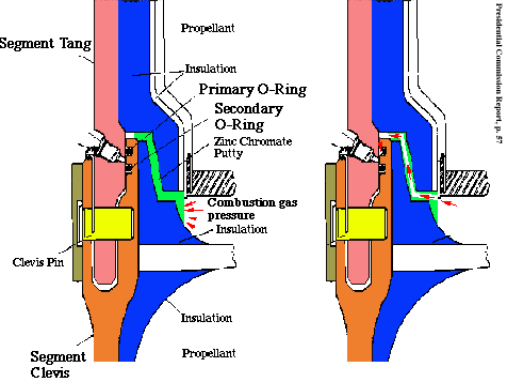
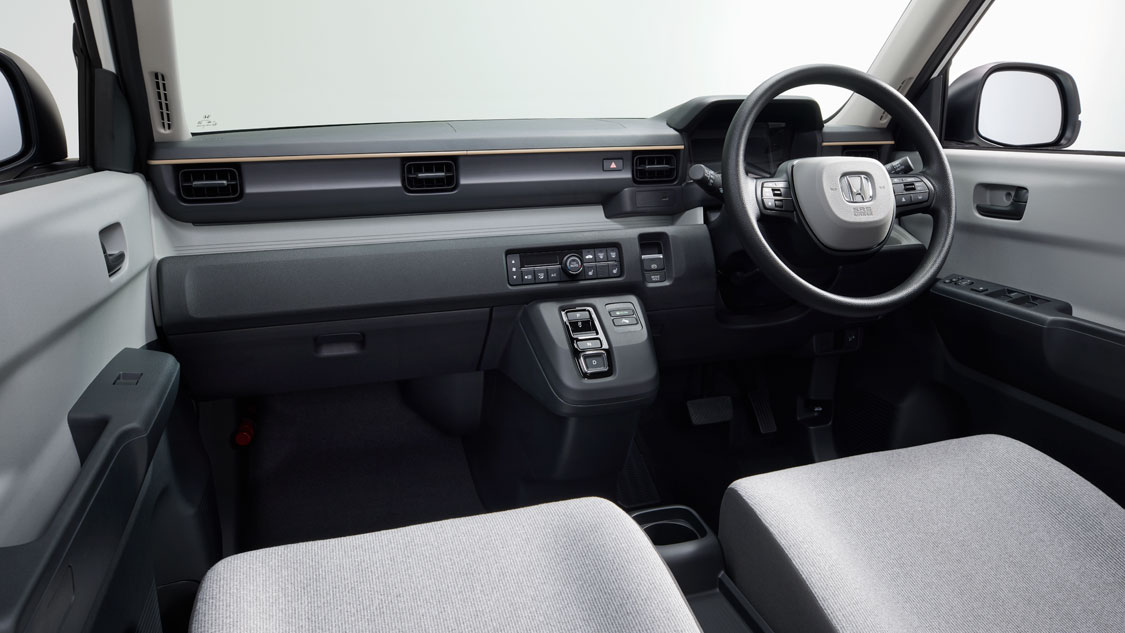
> Moon-to-Mars Deputy Administrator Amit Kshatriya said: “it was very small localized areas. Interestingly, it would be much easier for us to analyze if we had larger chunks and it was more defined”. A Lockheed Martin representative on the same call added that "there was a healthy margin remaining of that virgin Avcoat. So it wasn’t like there were large, large chunks.”
Followed by:
> The Avcoat material is not designed to come out in chunks. It is supposed to char and flake off smoothly, maintaining the overall contours of the heat shield.
This is echoes both Shuttle incidents. Challenger: no gasses were supposed to make it past the o-rings no matter what, but when it became clear that gasses were escaping and the o-rings were being damaged, there was a push to suggest that it's an acceptable level.
There was a similar situation with heat shield damage and Columbia.
In both cases some models were used to justify the decision, with wild extrapolations and fundamentally, a design that wasn't expected to fail in that mode /at all/.
I know the points that astronauts make about the importance of manned space exploration, but I agree with this author that it seems to make sense to run this as an unmanned mission, and probably test the new heat shield which will replace the Artemis II design in an unmanned re-entry as well.
reply