The "DIY with basic tools" approach of Sears extended well beyond houses. Sears also sold motorcycles [0] that came with a thick manual that gave instructions on how to do everything from assembling the motorcycle from the shipped pieces in the crate to fully disassembling and rebuilding the engine. I've restored a handful of them before, and they are a lot of fun to work on. They are simple enough that there aren't too many hurdles to get over, and they are always a good conversation starter when you're parked somewhere.
I would, until the neighbors started threatening to sue me in planning meetings and the local authorities demanded $30,000 of architect's drawings and then I was told I had to have two parking spaces for some reason and that my house was too small for any decent individual.
> I had to have two parking spaces for some reason
The reason for that is that in ten years' time, you may have moved on and sold your house, and the next tenants will probably own two cars (this being the US), and so will end up parking on the street. If everyone does this, it's a nightmare
Enforcing a number of parking spaces per dwelling is very common even here in France
And these are exactly the kinds of things the home buyer should take into account. But if the builder doesn't need or want something, they shouldn't be forced to build it for the sake of a theoretical buyer decades in the future. If the builder doesn't put in something that is in high demand it will negatively impact their ability to sell the home or they'll have to price it accordingly. Seems like a pretty good system without having a government commission tell someone they need an arbitrary number of parking spaces that they have no use for.
I completely agree, the best solution is those meters where you put in your license plate number, with 1h free per car per day.
The problem is that charging for street parking is trickier politically than setting rules for construction. Builders will build apartment blocks with not enough parking spaces, people will buy the apartments because they're cheaper, and then complain that the municipality is extorting them by making them pay to park in the street... It's a lot easier to just fix the problem at the source, even if it's not as fair
The issue is that it fixes on problem by introducing many others, but I rant here about parking enough.
Suffice it to say adding free parking introduce horrendous incentives, destroys streetscapes (your shopfronts are now parking), is expensive for everyone even if they don't drive, and makes walking, cycling, and taking public transport less viable and less pleasant.
Which is the biggest shift from when Sears catalog homes were most sold: most of the were clustered together in neighborhoods where that sort of kit home, or similar DIY projects, were precisely the norm. Most major cities you can sort of tell which ones were the "Sears catalog neighborhoods".
(It's funny now how some of those very neighborhoods have grown increasingly conservative in their old age by nature of gentrification and often being closer to urban centers than the exurbs that replaced them in people's minds as "suburbs".)
>It's funny now how some of those very neighborhoods have grown increasingly conservative in their old age by nature of gentrification and often being closer to urban centers than the exurbs that replaced them in people's minds as "suburbs".
Yeah, no. It's not that simple.
In the US the liberals tend to generally be more in favor of government management of what you do on your own property because of how the existing battle lines are drawn with regard to big government/regulation vs small government/deregulation.
The situation is flipped in SV where the slightly older and slightly less left leaning/liberal existing property owners want slightly more regulation (specifically zoning) than the slightly more liberal and slightly younger renters.
Rights of property owners isn't really a specific part of either party's platform. Desire for government micromanagement of what you do on your own property follows wealth much more closely than any ideology. A bunch of rich conservative jerks in a suburb of NYC will agree with bunch of rich liberal jerks in a suburb of SF when it comes to using regulation to prevent people from building things they don't want to look at.
Yes, :s/conservative/wealthy-NIMBY/ there if need be. It was not at all in reference to the (supposed) political spectrum but the wealth spectrum, and also the "tradition" spectrum (conserving the current state of the neighborhood, rather than allowing for change).
I doubt plumbing or electrical are any more complex now than they were 80 years ago. The principles haven't changed. What probably is more complex is dealing with permitting and inspections, which you alluded via fire code regulations.
This is sort of half true. Ancient knob and tube wiring is undeniably much, much simpler than what we have today, and you could teach anyone who ever worked with their hands to install it pretty quickly. It wasn't simple in an inspiring "simplicity is beautiful" way, but rather in an "oh my God we are all about to die in a fire" way.
Doing things correctly according to modern wiring safety code is something that requires a lot of knowledge, and a person could curse regulation and so on while learning all of that, but using all the modern tools would require a lot of knowledge regardless. There are dozens of parts in a standard electrical installation that simply didn't exist when it was just knobs and tubes.
You can buy a house kit today from places like Menard’s - my uncle purchased a garage and we assembled it over a couple weekends, I could see doing a house with much more time and skill
The other major difference is that supposedly most pieces were pre-cut and there were step by step instructions for the entire process. The menards kits don't pre-cut the wall studs and trim work although some efficiencies can be found in things like prefab trusses.
Bare land in cities doesn't exist anymore and isn't cheap. Labor is expensive due to high living standards. And politics can lower the supply of potential developable land even further, raise the cost of labor, as well as drive other differentiating concerns. Your neighbors can sue you (or compel the government or an HOA to step in) if they don't want you to build. And it's probably next to impossible to design a kit home that could meet the developmental codes of all fifty states, let alone all the municipalities.
It's why comparisons between say, Hyperloop and CAHSR are so infuriating. The technology is not the reason why traditional high speed rail construction in California is so expensive and slow.
Yep. People outside of the construction business can be shocked by how cheap materials to build a house actually are. It's the land and labour where the money goes.
Contractors are like lawyers. You're not paying them to argue your case. You're paying them because they have a professional relationship with all the other parties that's been built upon years of doing business with them.
The lawyer knows the prosecutor and the judge. The contractor knows all the inspectors and bureaucrats. They get favorable treatment compared to some nobody off the street. A huge chunk of what you pay them is compensation for all the time they spend building that professional relationship with the people who you need to appease. The fact that services are rendered is what blurs the line between business and corruption.
Yeah I think this is correct. It's rational for the prime contractor to increase his prices when he can deliver "value" in the form of greasing the wheels with subcontractors and inspectors.
At least on the inspector side, I wonder if governments started privatizing home inspection if this would help establish a more "market-based" treatment of builders. The city could honor certain third-party inspections as being "reasonable" for permitting.
I could see this working even better if the inspection service bills the building owner rather than the builder. Then the incentivizes are aligned for a fair inspection and fair treatment of builders that is in the owner's interest.
Seriously, good luck getting the subcontractor back to finish quickly when somebody who has been providing him with work consistently calls and needs a hand. As a homeowner you are back burner.
Very similar to trying to get support from a software company, when you're a one-off $19.95 customer, and their biggest enterprise clients are also calling.
This truly isn't so horrible in some places. Build slightly outside a town of 3000 in the midwest and see where you get. So long as you aren't taking away farmland, you'll usually get your permission.
In all things housing, the mantra to repeat is, "houses are cheap; it's land that's (sometimes) expensive."
By the way, if these prices surprise you, then you should have a look at the housing market in the vast majority of the U.S. that isn't near an ocean. The country is full of perfectly-fine housing in working-class neighborhoods for $150k or less.
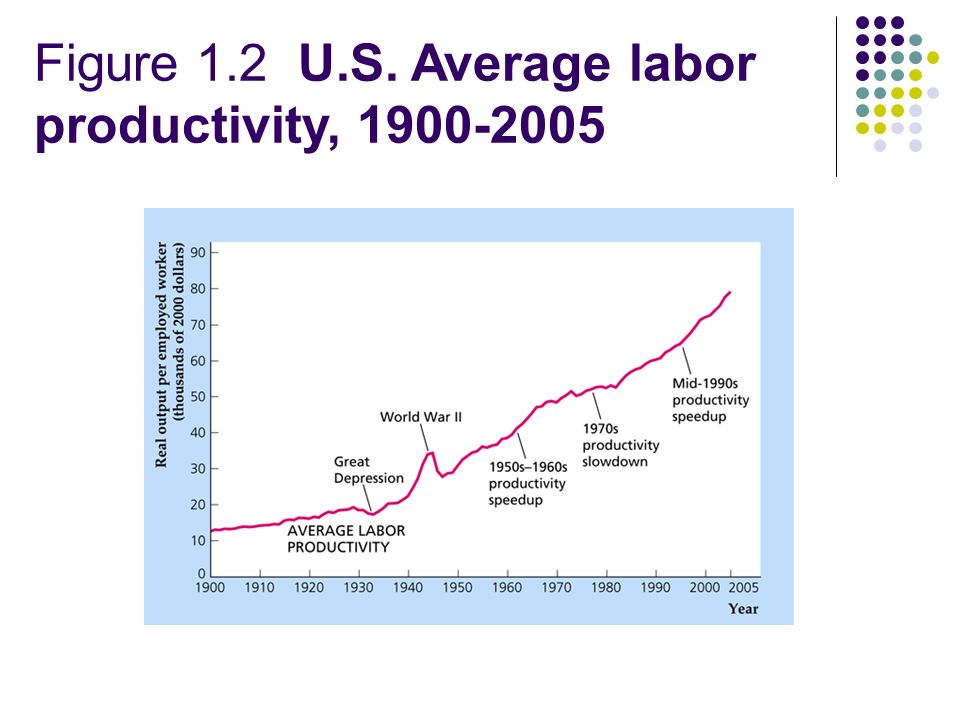
According to the CPI inflation calculator, The Classic home from 1916 for $918 would cost $22,282 today. That's actually quite a bit less expensive than the same size houses being offered by Menard's today, by about a factor of 2. I don't have any good insight as to why the cost would actually be higher today after 100 years of productivity gains. Productivity has increased by about a factor of 5, so all other things being equal the same house should cost only $4400 today. What gives?
I'm not sure where you are getting your numbers, but the construction industry has long had notoriously slow productivity growth. In the US, labor productivity in construction has stayed essentially flat since 1947, and decreased since its peak in 1968.
Assuming they use the same amount of material for each (it's hard to guess, on one hand modern houses are bigger and have more features, on the other hand older houses generally use much more substantial lumber) here are some ideas:
- I imagine the modern kits come with a lot more detail work already done.
- Raw lumber was very cheap back in the day while they were still cutting down virgin forests.
- The market of self-made homes was much bigger and allowed for larger economies of scale and competition.
The catalog price of the home is just for the materials, though, isn't it? It's not taking into account real estate, legal, administrative, or labor costs. Those are probably what's driving housing cost more than anything these days. I imagine you could get just the materials necessary to build the Classic home for around that much.
Has the main material costs changed (also assuming the material is the same, but it is likely different). Stricter building codes likely change what makes up the building which will likely add costs. Did the early ones have electricity or plumbing?
There are several Sears kit homes near me. They succeeded because they offered value. I don't know about the coasts but the homes were very popular in the Midwest.
So popular that close to eighty years after they were last available it is very common to mention a property is a Sears home in real estate ads.
Amazon may have sped up their demise but Sears lost track of offering their customers value decades ago.
Amazon had close to zero role in the demise of Sears. Keep in mind, Amazon had a mere $34 billion in total sales as recently as 2010. Sears was realistically already a zombie ten years ago, long before Amazon was taking a consequential bite out of retail.
The rise of Walmart, Home Depot, Lowes, Best Buy, etc. serving the Sears customers better - as you mentioned - is entirely what killed Sears. They ultimately lost in every category to those guys, from clothes, to electronics, to home & garden. They kept doing a lot of things, and did nothing well. Any article that claims Amazon played a role in the demise of Sears, is selling click-bait.
Arguably they did a couple of things (e.g. appliances) at least competitively. But the competition in those areas definitely increased from the big box stores, department stores in general have been in significant decline, and Sears as a whole was quite a mish-mash.
It used to be that Sears house brands--Kenmore, Craftsman, etc--provided good value to the customer. Not luxury or top-of-the line, but reliable stuff that worked and was worth what you paid for it. But in recent years that hasn't really been true. But then, it's not really true for just about anyone any more. Amazon copied the Sears model--sell everything to everyone--but it has also opened the floodgates of third-party sellers selling cheap crap and counterfeit goods. It's less like the old Sears and more like an old-world medieval bazaar.
Yes, it’s building permits. It’s not that they’re too complex, it’s that they vary not just by state but municipally within states. The modern incarnation of a low end manufactured home is a mobile home. They’re regulated like motor vehicles on a federal level. That’s why mobile home parks are zoned out of existence, to keep the poor out, same as maximum number of unrelated occupants or minimum lot sizes with maximum square footage making building anything but a luxurious single family home illegal.
The choice for a prefab dwelling is speed of construction and short time to inhabitance, and not really cost savings. Land is not plentiful and cheap like it once was. Then there are utility install and hookup costs which are quite large. Also, bare lots are not easy to find.
Sort of. With modern software design and modern manufacturing it doesn't cost anything extra to allow you to change to a different floor plan. So you can get a kit that is easier to put together than the sears home of the past (despite having to meet stronger codes), but it will be a custom home.
With standard lumber sizes kit homes don't gain much though. Home Depot sells precut studs (92 5/8) that allow the standard size drywall/plywood to fit.
There are a number of outfits offering various takes - these Q-Cabins are popular in some areas of CO and CA, and come in similar kit fashion without being log homes.
Link: http://theqcabin.com/
If you ever watch a house being built, there's a huge pile of waste lumber from cut off ends. Carpenters don't look through the pile looking for an end to reuse, they just pull a fresh board and cut off what they need. With some careful design, and pre-cut pieces, one can nearly eliminate this wastage and cut costs substantially. It's not just the boards, it's the millwork, plumbing, carpet, etc.
When I was in construction all ends longer than a foot (30cm) were saved and most were used. They look like the are to be discarded, because most are created the first day and just sit there. However the very last thing before we leave we look around and verify that there is backing in all the corners to attach the drywall to. This used most of the longer scraps.
I recall reading about a spec house builder who would design the houses so that the dimensions of the rooms would fit an even multiple of the widths of carpet rolls. This nearly eliminated carpet waste, and made installation cheaper, too, as there were no seams.
I live in one on these houses! The construction is very solid, the insulation is thinner than you would ideally want but overall it's a nice house. The trim work is beautiful, every piece fits together nice and tight. My only complaint is that I wish they hadn't used lead paint on it.
I didn't know they sold homes. Kind of amazing. It's a surprising footnote in the tragedy of Sears.
The popular narrative of an out-of-touch company unable to compete with the likes of Amazon is false. The CEO is a hedge fund manager who pillaged the company, sold off it's best assets (sometimes to himself), loaded up the company with debt, and used it to pay himself millions.
> Over the years of propping Sears up, Lampert threw his own money into the effort, and his friends and supporters said this wasn’t only in self interest: He wanted to keep the lights on and people employed. He and ESL were willing to lend at much lower rates than others were demanding. He had Sears pay almost $2 billion into the unfunded pension plan in the past five years.
> The traditional story of financial engineering is that smart hedge-fund guys structure complicated transactions that enrich themselves at the expense of ordinary workers. But it’s at least possible that Sears is the opposite story, the story of a smart hedge-fund guy structuring complicated transactions that blew through his fortune to keep ordinary workers employed through a financial crisis. Of course that’s not mainly a matter of disinterested kindness: If he just wanted to give his money away to workers, he wouldn’t have needed the complicated transactions. It’s mostly just a gamble that didn’t pay off: He expected that the complicated transactions would help Sears to recover and make him even richer, but they didn’t.
> I genuinely don’t know what to make of Lampert and Sears. There is a version of the story in which he rapaciously extracted assets from Sears, enriching himself while starving the business, and another version in which he selflessly pumped money into the company to keep it afloat at his own expense. (“Although he has been criticized for selling Sears assets, spending on stock buybacks and collecting interest on loans to Sears, he said it is unlikely he will come out ahead financially on his long-running Sears bet,” notes the Journal.)
You need to see one of the old Sears catalogs, the ones that were two+ inches thick and sold ploughs, wagons, blacksmithing tools, everything you could imagine of use to homesteaders. It's fascinating to flip through, excellent coffee table reading material.
Or maybe don't get your facts from a publication that has a demonstrated strong bias by MBFC and frequently writes articles celebrating the return of socialism to the American political discourse.
Or, and this is their worst offense, maybe direct one that allows me to connect over SSL and doesn't 302 redirect HTTPS to HTTP. It's 2018.
And this much more balanced article doesn't back up what you originally said and is pretty much in line with the Bloomberg article.
Sears' financial troubles began long before he ever got involved and he presided over the company's decline. He did things to protect his investment but didn't pillage the company in the way that you originally stated.
My wife and I are thinking about building a new house. I'm surprised how many new houses are still built from bespoke plans, and how much the plans cost. You'd think house plan 'Open Sourcing' would soon give us better houses at better prices. (I hope so, anyway.)
I'd be really interested in what these "kit homes" end up arriving as to the customer. Are you shipped a bunch of wood and materials at a spot and you start building? Is there some prefab stuff going on?
Very interested in knowing what the user experience is on this sort of product, so to speak
They actually came in railway boxcars. Roughly 10,000 to 30,000 numbered pieces (depending on the model) with detailed instructions. You would then haul them on horse wagons or motorized wagons to the lot.
True. Wagons were the only reference I could find. I had researched this and seriously considered applying to YC with a idea for mailorder-homes that could be move-in ready in 7 days. Not DIY but DI4U (Do it 4 U) and done with mostly aircrete and steel. Its actually quite easy due to the advances in material tech and equipment.
Prototyping was engineering heavy and costly and ended up back in India due to Visa issues :-( . Used the money to validate another startup. Turns out it is easier to sell ads than build houses.
Interestingly, many new homes around me have pre-built sections which are assembled/attached at the site.
The most common I've seen are wall sections which are studded and sheathed in a warehouse, sometimes with exterior covering as well (Hardie board most commonly), then delivered via crane truck. Trusses are also common.
Depends on the builder, really. Also the lumber supplier. There are many around me, they seem to offer this service as an advantage.
Builders who do this pre-assembly have a significantly quicker completion time, especially considering the weather, and their ability to get the roof and windows/doors in before the rains come.
Another interesting thing I noticed about this (our neighbor's house is being assembled in this way, and a couple more in the neighborhood) is that they'll hold off on window openings until after the roof is put up. So these wall sections are framed for windows inside, then sheathed as if there is no window there. After the roof goes up and shingles go on, they'll cut out the opening and throw the windows in. It's pretty genius as far as waterproofing a construction site goes.
These questions are hilarious because all of us are just a bunch of young "know it alls" and all the old timers would be able to tell you all about these sears homes....too bad no one here is older on this site.
The youngest person to have conscious memory of these things would have to be 82 or 83, and wouldn't be much of a help in building them. The 95 year old adult in 1940 is even rarer still.
I don't think it does. I think it's regarded as charming. There's a whole enthusiast community. Also: they're kit houses, but they're not like, mobile homes or pre-fab; they're just houses, like any other.


http://mcmansionhell.com/post/155602312686/the-mail-order-am...
Part two: http://mcmansionhell.com/post/155922980391/the-mail-order-am...