Too bad in the Netherlands we are hamstrung by an asinine law that considers a 2-wheel scooter (called a "step" here) to be the same as a 4-wheel cart that carries children (called a "stint").
This law was prompted by an accident where a person driving children in an electric cart crossed train tracks into the path of an oncoming train, and 4 children were killed.
Electric 2-wheel scooters would be perfect for a lot of places in NL - places where there is already a shortage of bike parking, and places where if you park and lock your bike outside, it _will_ be stolen if it is halfway nice. At least with a folding scooter, you can take it inside with you easily. Plus you can take it onto a bus, which is not possible with a bike.
Normally the Dutch are pretty thoughtful about their approach to laws, but this one just makes no sense.
In the current day and age it might be helpful to explicitly mention the non-electric nature of the scooters you are talking about. I had to re-read everything from the point where you start talking about carrying the thing inside.
How about revising law enforcement to a point where property rights don't have a de-facto exception for bicycles? Somehow, enforcement of property rights works quite well (not perfect, but well enough) for just about any property that can be legally stored on public ground, just bicycles are an exception. Thought experiment: steal a bike and steal the equivalent value of that bike in cash and imagine the reactions of executive, judicative when the theft gets noticed. It would almost be as if legislatives had added an "except bikes" paragraph to all laws about property ownership.
I tried to explain with the whole step=scooter thing, but clearly I failed. Many of the comments seem to be assuming I am talking about low-end motorcycles.
To be clear, however, I was talking about small folding electric inline 2-wheel stand-on devices.
As for theft, that's a huge and growing problem with bikes. That's another reason to dissuade me from having a decent bike that would encourage me to commute (although work from home now solves that). A folding bike or 2-wheel step scooter would have worked perfectly for me when I was commuting via foot, train, bus, and then foot each way to and from work.
> As for theft, that's a huge and growing problem with bikes. That's another reason to dissuade me from having a decent bike that would encourage me to commute
Almost half a million bikes were stolen in 2019 in NL, and there are reports of organized groups specifically targeting e-bikes now.
But in general, any bike that doesn't look like it could sell for 15 euros on the street is a target. The nicer it looks, the more likely a target.
If you're out on the streets often enough at night, you'll inevitably be approached by someone offering to sell you his bike for cheap. Hint: it's not his bike. But the nicer bikes get sent off and sold elsewhere.
Most people I know either keep their bike in their house at night, or they just accept the reality and buy old crappy bikes that they won't cry over when they go missing.
But the expensive features I would like are a comfy but light saddle, a light but sturdy frame (double butted steel tubing), belt drive, and ideally a small motor/battery combo for times when the wind really sucks. Since you asked. Christmas is coming up soon :).
> Somehow, enforcement of property rights works quite well (not perfect, but well enough) for just about any property that can be legally stored on public ground, just bicycles are an exception.
like what? the only thing I can think of that wouldn't be immediately stolen if left outside is a car. I don't find that cops care much about auto theft either. the main reason cars don't get stolen too often is because the VIN is associated with an owner and a license plate. police don't have to actively pursue car thieves to make it not worthwhile. I don't think any such system exists for bicycles, and I'm not sure it would be desirable anyway. "ownership" of a bicycle and other items of similar value can usually be transferred with an exchange of cash and a firm handshake, which seems about right to me.
The vast majority of them drive completely irresponsibly. They go at least twice as fast as the bikes on the bike lanes so they're constantly going in the middle of the lane into oncoming traffic. I've lost track of how many times I've had to swerve on my bike because someone comes right towards me.
The Netherlands does not actually have bike lanes. It has shared moped/scooter/bike lanes.
Do you believe in just banning things because people use them irresponsibly?
I think that is much more damaging than one person getting 4 kids dead, as much as this is already a tragedy.
Going with this reasoning people should be banned from using cars at all, because, frankly, I see a huge number of people driving completely irresponsibly and not thinking a whole lot about it until an accident happens.
Do we really want to live in a world where it is not possible to behave irresponsibly because all options were taken off the table?
>Do we really want to live in a world where it is not possible to behave irresponsibly because all options were taken off the table?
I lived in Singapore for a few years and that pretty much is that world and I was very happy. Don't really see the problem with banning things that people cannot stop to use irresponsibly and that cause loss of life, including cars. (well technically they're not banned, a license is just hard to get, 10% or so own a car).
Build good public transport, walkable cities, done. I mean have you actually considered how mental it is that we let people roam around in two tons of metal at high velocity next to pedestrians just to buy a bag of groceries. If people look back at this in 500 years we'll look like crazy cavemen
The knifes in my kitchen only I have access to and I know I'm not going to behead anyone. However I live by my principles and I have no problems with banning knives in public, or vendors securing them. (which is relatively common around the world btw, see Japan, UK, much of Europe etc..)
I worked for Samsung. Some guys in Korea got into heated discussion and carved each other with kitchen knives available in the office. Guess what, no kitchen knives other than plastic.
Here in Poland people just started bringing their own EDC knives.
Or that we need a licence to drive them. Personally I think there should be the equivalent to a driver's licence for both ebikes and scooters.
But it would kill the industry if it was enforced now, so I hope we will get it later once people actually got the taste for it and want to continue using them even if they need to get a licence.
Even in lanes explicitly stated as bikes-only, people don't give a shit. In Amsterdam it's particularly bad with the delivery drivers who're in a rush all the time.
In the US there used to be "ticket quotas" in some police departments. Near the end of a period, there could be cops everywhere checking for speeders if they were under quota.
The Dutch police could make a good revenue just from targeting food delivery guys. Excluding the newer e-bike delivery people, they are almost always speeding and driving like they just robbed a bank.
There are three clearly distinct paths practically everywhere in the Netherlands: roads, bike paths and sidewalks.
That means the bikes, cars and pedestrians are already separated.
The mopeds/scooters (who go up to 45kmh / ~28 mph) are the only ones who don't fit in. That why they're constantly switching between roads, bike paths and sidewalks.
Dutch law has two classes of 'moped'- both were originally conceived as motor-assisted pedal cycles, but in practice both are now mostly Vespa-type scooters with no option to pedal.
Both require insurance and an 'insurance plate' which is a different format from the standard licence plate seen on motorcycles. The rider must be licensed, but this can be either a car or a motorcycle licence (or a moped-specific licence which can be obtained from the age of 16, compared to 18 for cars and motorcycles).
The 'snorfiets' scooters have blue number plates, and are legally supposed to be limited to 25 km/h. The rider does not need to wear a helmet.
The 'bromfiets' scooters, with yellow number plates, are legally supposed to be limited to 45 km/h, but the rider must wear a helmet.
(In practice most scooters seem to routinely go much faster than they are supposed to be capable of)
In general, both types of scooter can use some, but not all, bike paths. A snorfiets is allowed on more bike paths than a bromfiets is- bromfietsen must ride on the main road in built-up areas.
All I can say is that the reality is that they come right at me on the bike path on the wrong side of the rode at 16+ mph. Every single time I go biking.
I can understand. When vehicles of different cruising speeds share a roadway, the faster ones are perpetually passing. So always oncoming straight at you. It gets worse with increasing density - instead of passing occasionally, now you're passing pretty much all the time.
Ebikes and smaller scooters seem to have standarized at 16mph (25kph). That is perfectly compatible with bike lanes. A bike in a hurry can easily go over that.
Imperfectly compatible. Sure bikes can go that fast, but rarely do. The disparity in average speed results in frequent passing which is most of the problem. Head-on collisions and clipping become a thing. That's kind of the whole ball game, and why they don't get along on paths.
Almost no bikes actually go that fast, while the scooters practically always do, which is they they drive in the middle of the lanes or into oncoming traffic. Thus head on collisions etc.
It depends on your local bike culture I guess. In the US scooters go 15mph and bikes go like 12mph if you are in street clothes, ~20mph if you are in spandex.
Mixed traffic is a problem that every freakin heavy industrial site in the world has managed to solve.
We just can't solve it for cities because people have their heads up their asses and everyone wants their preferred class of traffic to get preferential treatment.
That works very well. Much better that distracted drivers and speeders.
But rules and people don't get along that well. Folks get tired and impatient. Even in the industrial environment there are expected failures per 100,000 hours etc.
Still, agreed we'd all do better with a more professional class of driver and licensing.
I am referring to the little foldable two wheel platform vehicles as scooters. I am not championing the motorcycle things.
Outside NL, the "step" is a scooter, and the "scooter" is a moped.
Mopeds should be banned from bike paths, or there should be heavy enforcement of speed limits on paths.
A little folding 2 wheel platform vehicle going 16kph is certainly no worse than a large Dutchman riding the same speed on a 35kg omafiets... not to mention the person on a 40kg electric bike who is doing 23kph.
> A little folding 2 wheel platform vehicle going 16kph is certainly no worse than a large Dutchman riding the same speed on a 35kg omafiets
A light bike doing 16 kph will knock you down but not seriously injure you unless you're unlucky.
Mopeds are doing more like 16 mph (25kmh) and easily weigh 70+ kg. That's a fast and heavy chunk of metal. If that hits you, you will be badly injured or killed. That changes the stakes of the bike paths from scraped knees to death or brain injury.
As I have tried to explain throughout my comments, I am referring to what the Dutch call a "step" - like what Bird has been putting in cities around the world. I am absolutely not talking about mopeds (small motorcycles).
I very much do not want motorycles or mopeds or even fast electric bikes (which can weigh nearly as much as the rider) on bike paths. A scooter/step weighs about 15kg, and more importantly, most of its weight is very close to the ground. It might knock your feet out from under you if it hit you, but it won't crush your ribs or head unless you're already lying on the ground.
I thought they were different things. A Stint comes under the 'bijzondere bromfiets' category, the same as a Segway (which remains legal on Dutch roads). Each individual model of vehicle in this category has to be specifically approved by the government for use on the roads.
After the 2018 accident (in which the brakes failed for an unknown reason), the Stint lost its specific approval. Officially there wasn't any effect on any other vehicle in the category, though I can imagine that it might have made the government more reluctant to approve new models- no electric folding scooters have yet been approved.
In the meantime, I think the best option is a folding bike, electric or otherwise.
Folding bike is indeed the best legal option if one wants to ever ride a bus also, but even the nicest ($$$$) folding bikes are so much less portable than a step.
I doubt we will get used to people taking their vehicles inside. I agree about the law being a bit silly though. Getting run over by a train can happen regardless of your vehicle of transportation.
Though it depends where you are, busses don't have the space to carry a lot of people with foldables. They'd need to be redesigned for such. I saw a Xiaomi foldable e-bike announced the other day for 1k USD, but then I saw this already exists. There's a lot of people driving around on 2-wheel e-bike (non foldable) as well these days. Today I even saw a kid on one going to school.
E-bikes are the worst thing on Dutch cycling paths. I experienced them for two years. People speeding irresponsibility on these things going 40kph and practically inaudible. They just zoom past you and you're completely unaware of their presence until the last couple of meters.
A big danger to cyclists, moped riders and pedestrians.
There are two types of ebikes, and the law draws a distinction between them. There are pedlecs (25kmph) and s-pedlecs (45kmph).
The s-pedlecs have a license plate and are illegal on most cycle lanes. The only place where they would be legally allowed next to regular bicycles/pedlecs would be outside the cities, on the "bike highways".
Unfortunately there is zero enforcement. Either there would have to be a massive amount of police controlling how people drive, or they have to be banned.
I don't think I've ever seen the 45km/h version on bicycle paths though. The 25km/h versions have similar problems as described, so I'm guessing they were what was referred to, but they definitely don't go that fast.
I have never seen a speed pedlec on a bike lane inside the city. I can't even remember the last time I saw one in the city generally speaking, as they don't seem to be extremely popular.
There used to be a way bigger problem with enforcing of scooters in the bike paths, though that is now way less of an issue, as far as I can tell. The only scooters legally allowed on bike lanes are the ones limited to 25kmph. I still find them dangerous, but considerably less so than how it was a few years back.
This is good. It makes no sense at all to do electric car incentives for thousands of dollars but not incentivize far cheaper and greener options like they've done in Canada and US.
Escooter/ebike is rarely a replacement for a car. Maybe if you use your car only to commute to work, but in these cases, especially if you live in a city, public transport is a good replacement as well. The main advantage of a car is freedom. You can go anywhere you want, any time you want. Need to buy groceries for the whole week and deliver them home, a car can do that. Your wife is pregnant and you need to deliver her to the hospital in the middle of the night, your car can do that. You want to go on a spontaneous trip somewhere, your car can do that.
> Escooter/ebike is rarely a replacement for a car.
True for most of the US, but that's by design.
Our family of three gave up having a car when we moved from California to Munich, here our electric cargo bike is our 'car'. Works great. Plenty of other families without cars as well.
That's not to say that a car wouldn't be very useful or more convenient for certain kinds of trips, of course (e.g. Ikea). But it doesn't feel like a necessity here the way it almost always felt like one in the US. And that's for a simple reason: Munich actually takes different forms of transport seriously, including street design, allocated land, and $$$ (well, €€€). I could go on and on about the differences.
In the US, mandatory very low density zoning, as well as local transportation systems designed to be car-first (or car-only), are the reason driving is usually a basic necessity. But if you start upzoning and pouring serious resources into other modes of transport, they can work very well too.
edit: I guess I should say, thinking of it as "a replacement for a car" is a very American mode of thinking, because it assumes that the car is a necessity in the first place. The aim should be a system where a car is a nice-to-have, not an integral component of every single person's life, a system where an ebike doesn't need to be a "replacement for a car", because you don't strictly need a car to live your life.
I am not American, I am Polish. And having a car here is pretty much a necessity unless you live in the center of a big city. Unfortunately, most research in this seems to focus on places like Amsterdam or Berlin, but it completely ignores the reality outside of city center of capital cities.
Nah. We live on the outskirts of Munich and it still works fine. Suburbs of Munich you can still get by without a car easily enough.
Hell, even little Bavarian towns that I've visited, you don't really need a car, the way you do in the states. Somewhere like Lenggries or Bad Toelz, you can absolutely get around walking and biking, it's safe and pleasant and convenient in-town, even though these are nowhere close to big cities (IIRC Lenggries is like 10k people). Now, visiting any other city using buses/trains out there far, that's a pain, so you probably want a car, but you don't absolutely need one for daily life.
Compare that to living in the south SF bay area, which has a sizable population, but getting by without a car is nevertheless a nightmare. Biking is dangerous -- the year before I moved, I got hit twice by cars, including once with my son on it -- there's almost nothing within walking distance (and it's highly unpleasant to boot) and public transit is sparse and slow.
Anyway, I can't speak for Poland, but just about everywhere I've visited in Europe, compared to the US the necessity for a car is very drastically reduced. Even the places where you want a car for some trips, you often don't really need them for daily basic errands.
The shift in where people live is increasingly toward cities, and away from places where one is dependent on a car. That trend needs to continue for us to continue to afford our infrastructure and survive as a species, so it's where we're going to focus.
Depending on where you live a car may be a necessity. In suburban or rural US you won’t have a nice time. The more infrastructure you have to alleviate the need for personal cars the less you need a car or a car replacement.
I can personally recommend the Vogue Carry 3 (we own one, also family of 3) https://www.voguefietsen.nl/carry
Popular is also the model TROY.
Price around 2000€ (e-bike versions).
> Escooter/ebike is rarely a replacement for a car.
Yeah, well, I guess you are not from a big city like Amsterdam.
> Need to buy groceries for the whole week and deliver them home, a car can do that.
I just order my groceries online and get them delivered. I could also use my cargo bike, normal bicycle, or walk to do groceries. Neither of these options is electric, but you can buy these electric. Last time I checked, each of these options give me enough 'freedom' so that I don't need a car. Sure, I can't go to the other side of the country with my car, but I don't want to either. If I am going on a spontaneous _long_distance_ trip I got two options: I go by public transport, or we rent a car. Cars are overrated; we got a lot more options nowadays so that the use of a car is diminished (though not completely). People in Amsterdam are living without a car and go by fine (they also need the money they'd otherwise spend on a car on rent ...).
No, it works because Amsterdam has infrastructure in place to make it work. My "home" town is Bath in England - population of ~90000, and vastly smaller than Amsterdam. However, the transit infrastructure there is terrible. It's also worth noting that Amsterdam has not always been how it is today: in the 70s and 80s it was filled with cars.
The main difference isn’t the size, it’s the layout.
I’m in Berlin (metro area population 6.1 million compared to LA’s 13.1 million) and I don’t need a car or a bike because I have at least 22 food supermarkets (including 3 in a shopping mall), 2 household electronics stores, a building supplies store, a hacker shop, and countless bakeries and spätis [0] within 1.0 miles.
Judging by Google Maps search results, I’d say Amsterdam is similar.
I’ve explored a few American cities on foot, and if those places were representative of the rest, I can understand why Americans would regard cars as mandatory; but the model of large stores, few and far between, is not the only one.
By Berlin standards I'm in the middle of nowhere yet there are at least 3 stores in walking range and this is actually a very car dependent city. They just put stores near residential buildings. That's all there is to it.
At least for us Americans, there's more to it than practical disadvantage, though we do have to travel much longer distances much more often here. If I say we love cars because they represent freedom, I'm not sure that gets it across. For a century they have been a tool that allows the American to go when he pleases when he pleases. Everyone remembers the day his dad tossed him the keys to the car and the freedom that brought. We appreciate them on a much deeper level than is easy to communicate, and for that reason they will not go away, nor should they.
I suspect that, for the most part, this is advertising. Sure, advertising creates culture, but you're mostly communicating the result of what you're told by the media you consume.
That culture doesn't somehow make it sustainable or healthy to drive so much.
I get your hesitation, but it’s not advertising. You didn’t want your mom to take you and your crush to the movie theater. You didn’t want to wait 30 minutes until after practice to get picked up because your parents both work until 5.
(I’m afraid that, your worldview may be, more narrow, than you, may think.)
Youth here walk/hike/drive (with scooter) or go with public transport on top of car (if 18+). Obviously it doesn't work well if distances are huge. A car is useful in rural areas.
Oh, I assert all that land use happened because of advertising and regulatory capture! The movie theater was in walking distance before the massive interstate highway giveaways.
As an American, the only time a car represents freedom to me is on a road trip through rural areas, and it's perfectly easy to rent one for that purpose. The rest of the time, it's a massively expensive and dangerous anchor.
I can imagine the day dad tossed the keys to the car because in USA that is at age 16 while say drinking age is 21; so it comes first, as an earlier sign of recognition of becoming an adult. Its like a nod of responsibility. Here, you are allowed both when you are considered an adult (18). That's post high school. Students get to travel for free with public transport (either throughout the week or in the weekend, they have to pick either). How nice is that? Its great, unless you live in a rural area. Instead, kids here get proud when they get their first scooter (at age 16 when still at high school).
What you say about car freedom for rural life, sure. I wasn't on about rural life though. I don't know how good the public transport is in American cities (it is very good in Amsterdam, but also perhaps even better in say Berlin).
I'm curious about that (didn't get to use it when I was in USA). I would guess that someone who lives in New York City who doesn't own a car can rent one if they go to say Pennsylvania. But my guess would be, like in Amsterdam, they don't need one when they reside in New York City.
> it is very good in Amsterdam, but also perhaps even better in say Berlin
Oh, it’s fantastic in Berlin. Within 1.6 km of me, there are 18 tram stops, a similar number of bus stops, and 3 stops on the Ringbahn. The trams and the trains come roughly every 5 minutes.
I suspect one other big difference between American and European when it comes to the feeling of car-derived Liberty is the fact that, before the Schengen Agreement, Europeans needed passports to travel between countries (and European counties are about the same size as American states); and after the Schengen Agreement, air travel was cheap enough that it (rather than cars) represents the large scale freedom of movement.
Don't know why you are downvoted, because individual transport is so established in our family and social structures that it is unrealistic to expect a scooter, bike or public transport to fully replace it.
Yes, if I live in a coastal city in the US, maybe you wouldn't need a vehicle. But everyone else...
If your trip to the doc is > 20km or > 15 miles you probably either take the car or have a lot of time on your hands. Same with family that needs your support from time to time.
Transporting even just groceries can be a problem on a bike. Sure, I said the same thing when I was a student when the next supermarket was directly next to university and I could just go there every day.
I grew up in the midwest US (northern kentucky) as a "latchkey kid", and the thing that gave me freedom up through my highschool years was having a bike.
I didn't have a stay at home parent that was able to drive me to e.g. the fabric store when I wanted to make a kite one summer, so I biked there. The public swimming pool was about a mile and a half away in the center of town, mildly long walk, super quick bike ride. Same with a lot of other stuff.
To this day, 15 years later, I deeply wish it had been much safer and made more convenient for kids and people to bike around. It was so nice to be able to do whatever without having to be driven around, but some of it definitely was not at all safe due to the car culture in the area.
I still bike a lot as a result of this and I'm about to purchase a cargo ebike to let me pick up groceries and larger packages (we have some sizeable 300ft climbs here). I can tell a massive difference between my fitness (28 years old) and my similarly aged peers because I've stayed active biking. It's really sad to see.
It's insane how much people will complain about removing a single lane of traffic on an excessively large urban "road" to make life much, much safer and healthier for kids, people walking, etc.
Having a 5 lane road for the amount of traffic this road gets (very minimal) is absolutely insane, and it results in people going 50-60mph on a 35mph road on one of the most active cycle routes around. The section of road with the protected bike lane has no worse of traffic at all, and is much safer. However, due to the political bickering and car obsession about 70% of the bollards have been run over and destroyed by cars, and no one on city council will stick their neck out to get them repaired.
It's so frustrating and selfish for people to do this!!
US? Hell, look at what happens when countries start to open up from oppressive governments. Cars show up everywhere. We can never over estimate the desire by any people to have the freedom to go where they want when they want.
The issue with scooters is the same with motorcycles. First and foremost is safety but quickly arriving behind that is weather. Get below 70F and it can be cold even moving only 20 to 30 miles per hour then top it off with rain or worse?
The second issue with scooters and motorcycles is that in some regions they are just too easy to make off with so in the case of scooters I could see a government just using the rental system where they are everywhere giving no value in stealing them.
I agree people want cars, but people also want single-family detached homes & neither of these scale to big cities (where - corona notwithstanding - increasingly large portions of the population move to). IMO If you want to live in a big city you have to take a hit for the greater good and forgo some things you want.
There is no (reasonable) way to have cities like Tokyo, Delhi or Shanghai if each family lives in a detached home & people commute to work daily by private automobile.
And this is not even tackling having to alleviate climate change by reducing emissions.
So stop micromanaging what people build on their property and drive on the road and let the market decide. Get rid of zoning so people and build whatever they want and get rid of registration BS.
If someone pays money to register something it shouldn't be the state's concern whether it's a car or a fork lift, moped or a bike, as long as it fits in the lanes and has the right lights they should be able to drive it on any road on which they can keep up with traffic.
Nobody wants to do 40 on a moped on the interstate with traffic speeding by. Market solutions for both these problems have been proven to work well.
The market does not on itself account for externalities: it can be better for the individual to drive a car even if it's better for all the road's users collectively if as many people as possible took the bus or rode a bike (less congestion).
Likewise your personal air pollution doesn't make a perceptible difference but if everyone is driving cleaner vehicles it benefits everyone collectively with cleaner air (this was very noticable when e.g. Delhi required auto-rickshaws to convert to natural gas).
Yes, we went down to one car and two e-bikes. It would have been a struggle without the bikes as we live in a semi-rural area with poor public transport.
Same here. We live 18km from the city center. We have an electric car that we rarely use and two e-bikes (45km/hour kind) that we both use daily to go to work (300m elevation change). It's perfect !
How long do your batteries lasts which such a workload?
I have a short 15 minute 3-km ebike daily commute. But after 1 year the battery is obviously weaker. And i never made it past 2 years before a battery swap. I charge daily.
(I still kept my smallish car, which i now use much less)
My ebike has a 814Wh battery. It'll easily do to and from work twice. I've already done 7000km with it and no noticeable difference (<10% ?). But it's true that the battery degrades. I don't really "mind" in the sense that I treat it as a consumable and not a forever item.
This is what I think needs a bit more discussion & airtime. You're never going to eliminate cars entirely, don't try. But I think there's a good case that one car may be enough for many families when combined with ebikes, transit, & the rest.
This is exactly the setup my significant other and I have. We even live in an urban area that is pretty bike hostile, car obsessed, hilly. We have one car that we share and the other bikes/walks when needed.
There have only been two or three times over the course of about 7 years that having two cars would have been nice, but it obviously didn't make that big of a deal.
It's definitely helped keep us healthier as well, particularly compared to our similar aged friend group (~30 years old). We've both gotten comments from our physicians in the last few years because of this too!
In this case the money is enough to effectively get a free e-bike or e-scooter, so of course people who can will use it. They may still buy a car as well, actually, since nothing prevent them from doing just that.
I've fit a weeks worth of groceries on my bike pretty easily. Between the rear rack, the panniers, and the trailer I can haul a lot of groceries. But you are right that it's a good idea to have at least one car in a family. Especially in the US. Although I would check first that it isn't cheaper to get a rental or a taxi when you need it. The only reason I still have my current car is because it's already paid for anyways and doesn't cost much to keep around.
I'm a father of 2 young children in Berlin. We have no car (neither myself not my wife even have a driver's license) but we have a cargo-bike for taking the kids places & regular bicycles when we go alone (or when one person is riding the cargo bike and the other isn't).
They are not even electric (although sometimes I wish they were) and this is very common for urban German families. If it is impractical in US cities it is only because they were built that way.
When we have to go long distance we take trains (that often have an extra car for taking bikes with you).
I double-checked if it was part of the government's marketing campaign (like an ironic meme or something), but nope: the unshopped photo is in the original article[0]. Also,this article adds zero value to the original, as far as I can see, unless we count giving us an easy target in that bad photoshop attempt.
I read somewhere that electric vehicles had some trouble operating in cold environments - something to do with a big loss in mileage. Has this problem been resolved in modern vehicles?
I think modern cars mostly heat up the battery, which comes with a hit to range. I don't think e-bikes do the same.
We have some company EV and in real cold weather with active AC and ventilation within cities, the range almost halves.
That said, combustion engines also need more fuel in these cases, which is bad because it also increases pollution as long as the vehicle is still cold. It just isn't as noticeable because waste heat is used for heating. It also means that it doesn't really work until you drive a bit.
On my ebike I might drop from 100%->70% on a summer's ride to work and 100%->60% on a cold winter day. (It doesn't get much colder than -20C though)
So there is an effect, but it isn't terrible. Ideally your battery already has extra capacity in the first place- everybody knows that some buffer capacity helps extend the life of the battery.
I find snow & ice are not a big deal for range either, even with studs & aggressive tires, because you reduce your speed & assist for safety.
The batteries can be heated in cars with liquid thermal management systems which pretty much all new ones have (older Nissan leafs and others did not). This removes a lot of of the impact on range... except if you use use heat in the cabin.
Due to them being so efficient, most electric cars can't use waste heat like internal combustion cars, which means they need a separate electrical heater which of course has an impact on range.
> The automobile club tested the cars at 20 degrees and 95 degrees, comparing the range to when they were tested at 75 degrees Fahrenheit, according to a report on the study.
> At 20 degrees, the average driving range fell by 12% when the car’s cabin heater was not used. When the heater was turned on, the range dropped by 41%, AAA said.
> At 95 degrees, range dropped 4% without use of air conditioning, and fell by 17% when the cabin was cooled, the study found.
I wouldn't call Oslo with winter average minimum temperatures of about -5 C a cold environment
Now something with more continental climate like Quebec City with average lows of -15 C or so would be more like it.
Now, people drive Teslas even in mid-to-northern Russia where one can get weeks of -20 C -ish easily. But they just show off in summer, having a trusty 200-series petrol Landcruiser handy.
If you had a car in that nippy weather, you most likely were forced to install engine block heaters and literally plug your engine into an AC outlet overnight.
Electric vehicles can self-heat the batteries with internal heaters already installed. And you are probably plugging the car into charge overnight anyway.
Diesel isn’t great either - the diesel gels in the cold and has to be heated again. It’s a real pain, I can see why electric cars are popular in cold countries even if the range isn’t as advertised.
Yeah well. People do not realise what 'cold' means.
It's when the standard equipment of a gasoline engined car includes a preheater which is basically a dedicated burner to heat up the engine because otherwise even a gas engine would not start.
This is wonderful news. I can't wait for California to do something it. Instead of subsidizing wealthy suburban dwellers with discounts on their expensive new cars which still generate harmful pollution [1], we could subsidize multiple times as many e-bikes for lower income folks who could have a bigger impact on our roads and air quality.
Standard "cash-for-clunckers" schemes are about subsidising the auto industry, they are about boosting sales.
Now this one seems different but what is missing is an analysis on whether it is a good use of resources and actually positive for the environment to spend money on scrapping an existing car instead of continuing to use it for its useful lifetime and only then to replace it for a better car or mode of transport.
I highly doubt it that this is missing - it's just not mentioned in the article.
Also, this argument sounds a bit like sunk cost fallacy to me: the car already exists, so whatever embodied energy it has is irrelevant.
It is likely to stay on the road for decades if not encouraged to be removed. Meanwhile the embodied energy of an ebike or escooter is tiny by comparison, can in principle be powered by renewable energy, and the difference in energy footprint is so huge that I would be very surprised if it doesn't earn itself back long before the expected life-time of the car ends.
On top of that there's reduction of traffic congestion and air pollution, and less pressure to create infrastructure (like parking space) for cars. All of which is the kind of externalized cost that isn't actually externalized if you're a government.
You have a very high opinion of politicians and policy-making. Perhaps too high an opinion, I fear.
It's not that uncommon for such policy decisions not to be fact-based because "of course it's better", so I'll keep my critical stance on governments' policies.
> Also, this argument sounds a bit like sunk cost fallacy to me: the car already exists, so whatever embodied energy it has is irrelevant.
No this is not the point. It costs energy and resources to scrap a car and to produce and distribute its replacement so this should be taken into account. Keeping a car longer reduces the need to produce more cars and to scrap existing cars. If I scrap my car every year than a car must be scrapped and a new car produced every year. If I keep my car for 20 years then this process occurs much less often, which is much more economical in terms of energy and resources.
The cost of the subsidy could also be spent on something else that may or may not have an higher impact.
I am just saying that this is the sort of decision that cannot be judged at face value, which seems to be what many people do ("great decision", "of course it's positive", etc), without digging quite deep into the numbers. And I must say that your comment goes in the same direction.
So, maybe it is positive and useful, maybe not so much. They would need to show the numbers for anyone to make an informed opinion.
> You have a very high opinion of politicians and policy-making. Perhaps too high an opinion, I fear.
Could we please not use personal accusations like these? I disagree with your viewpoint, fine. To point at that as if this must mean it is an unreasonable and naive opinion, without giving any factual back-up of your own viewpoint isn't going to get us anywhere.
> It costs energy and resources to scrap a car and to produce and distribute its replacement so this should be taken into account.
- the scrapping of said car is an eventual cost regardless
I don't understand the reason for arguing and turning aggressive here.
My only viewpoint is to reserve judgement on these policies if the facts are not known and to state that governments do not always make fact-based decisions on these issues (all issues in fact) because these are difficult and technical issues and that politics dictates a level of showing that something (anything) is done.
If this policy is indeed fact-based then very good. If it is, and will be, assessed on clearly defined metrics then even better.
If you destroy a useful asset before the natural end of its usefulness, I do think you should account for the portion of “embodied energy” that you waste at that moment. It might still make sense, but to treat that energy and emission as entirely consumed in the first meter of car’s operation instead of over its useful life seems a misapplication of the sunk-cost fallacy.
But from the perspective of the government, the asset has already outlived its usefulness. Every further use (regardless of scrapping) of the car is perceived as pure loss. This may be different from the owner who may be unable to buy a new car, or who sees an individual gain.
The subsidy aligns the perspective of the owner and of the government.
My guess is the level of subsidy here is low enough that not too many cars with a lot of use left in them are being scrapped. That is, the cars being traded in were going to get scrapped soon in any case. The main effect of the subsidy is to move people to greener alternatives, rather than finding another car.
> That is, the cars being traded in were going to get scrapped soon in any case.
Would not that make this subsidy no more than a "windfall gain", then? I.e. it makes little to no difference and people are just happy to pocket the extra money.
> The main effect of the subsidy is to move people to greener alternatives, rather than finding another car.
An ebike/escooter is quite different from a car so I have my doubt that people will change their purchasing decisions base on a small-ish cash bonus: If I need a car I will still buy a car but if I was already thinking of buying an ebike/escooter than obviously I like the windfall as a bonus. Or maybe I'll buy an ebike with the subsidy cash in addition to buying a new car...
People have cars for all sorts of reasons. To the degree this program works, some good will have been done. And it is likely to sway some who had not considered the options yet. Especially with the subsidy.
Sad the article doesn't report anything about changes in e-bike use etc. Just that people are applying for and taking taking the money. Of course they are.
> To the degree this program works, some good will have been done.
You need to objectively define what "works" means. We need to compare the cost with the effect and with the likely course of events without the subsidy (the latter is often difficult to do especially when the 'natural' trend already goes in the same direction as what the policy tries to encourage, and in this case sales e-bikes and e-scooters are already booming).
I may sound very critical. This is because I do think that many of these so-called "green initiatives" at the moment cost public money with no clearly quantified or quantifiable benefits at a time when public finances in most European countries are already pushed to the limit.
> Just that people are applying for and taking taking the money. Of course they are.
We don't construct cars, but we have some companies here, Siemens has wiring factory, CIE Forge is manufacturing engine parts for VW concern, And some super specialized CNC workshops manufacturing parts for car industry too. But it's not a major contributing factor for economy.
Such small country does not have proper car industry, but there are some local electrical trolleybuses made(maybe few dozen a year), or some parts for automotive industry - like continental tire factory in Kaunas, some parts made for mercedes, etc, etc...
Maybe other Lithuanians can chime in (I'm not from there, but my girlfriend is), this is something that may only work in countries with similar geographic profile (Netherlands for example). I remember the drive from Riga to Lithuania or travelling by train there, and I don't remember seeing a flatter place in my life (and I've been to most European + American countries). When her parents visited they were surprised with how much we go 'up and down' in just my city alone.
I can see this working in some flatter areas of the country (same as I see bike adoption in those areas), but find the e-scooters at least too slow/battery hogs in this scenario (not sure about e-bikes though)
In any case, this is a right move for them, but I think pegging this usage to some kind of license is also important.
I'm not too familiar with the local rules in Lithuania, but the EU has two different possible classifications for E-Bikes:
* EU-Spec E-Bike: Up to 25kph, No license / special equipment is required
* Speed Pedelec: Up to 45 kph, Requires licensing, insurance, and a special helmet. In the Netherlands, you can't drive these on bike paths / may have to mingle with cars.
* US-Spec E-Bikes: Up to 32kph, unregulated / illegal
In general, all three categories are capable of easily sustaining reasonably high 25 to 35kph speeds for 40 to 150km on a flat surface.
If you're dealing with hills or wind resistance, you'll need the beefier motor & battery of a pedelec, or you'll need a slightly more specialised E-Bike, but there's no reason why you couldn't make it work by throwing a bit more bike at the problem. I've taken E-Bikes around some of the medium sized hills in San Francisco before, and apart from having to pedal slightly harder and my battery usage doubling, cycling on a hill wasn't that much different than cycling along Market Street.
I've been living in Vilnius for 9 months. Scooters see a great deal of use within the city. I use a sharing service daily for my commute where 3km cost about 1.2eur. Steep inclines well if the total load is under 100kg.
Lithuania is indeed quite flat, but perhaps not as flat as Netherlands. There are quite hilly areas in the country too. The more important aspect, though, is that the highest car concentration is in the cities and they, in general, tend to be flat(ish).
Question , could this e-bikes be equipped with breaks that will recharge the battery? would help with less flat terrain but I am not sure how expensive, efficient and space consuming such a system would be.
You can, and indeed many direct-drive hub systems include this, but it's not a range issue. It's more to save some brake wear. In a 'best case' scenario of many steep hills, such a system will extend range perhaps 5%. Much less in normal use.
they are sometimes, but actually that is rather pointless. The energy wasted by braking is quite negligible compared to riding at reasonable speed with some headwind. better invest in a better battery or make the bike cheaper than regenerative braking. At least from my perspective with an electric cargo bike an normal e-bike, and a super expensive speed-pedelc (45km/h) Stromer bike with regenerative braking. Because of the regenerative braking my fastest bike is actually the slowest if the battery is dead. Also it is almost impossible to go faster than the speed limit as the bike actively brakes whenever you go over 48 km/h. That's why I am selling it.
First, I believe conventional wisdom is you can recover 1-3% of total battery capacity, which in a 400Wh pack might be as little as 4Wh, or one AA battery worth.
Second, you can only actually do regen with a hub motor, but mid drive is much more popular.
If the people in Oslo can and use e-bikes and e-scooters a lot (which made me quite surprised) to move around I'm sure that other non-flat countries can do well.
While this is a nice initiative on many levels (from reducing emissions to getting people on bikes/scooters etc.), but I can't see it working well for few reasons:
- We have pretty harsh winters (well not the last one), so any biking/scooter'ing isn't really possible for at least 3 months, thus one still needs a car.
- Only few (I'd say only 3 largest) cities have kind of an infrastructure for scooters/bikes and only for major travel paths - outer-most city rings aren't well suited for such traffic.
- Local traffic culture (which goes both ways BTW) - car drivers aren't really well adjusted to bikes, and scooter/bike riders also have some not-so-great attitude on pedestrian walkways.
TL;DR - this probably would work really well _somewhere_, just not sure Lithuania is the best candidate for something like this, even if I personally still appreciate this.
e-bikes deal with hills just fine. With assisted drive (required in the EU) there's extra power from human input. The energy you use going up is free when going down.
If it doesn't pass, it can't be driven and won't be on the road anyway. If it does, it is less efficient than an escooter/ebike, so it is worth it. Either method gets cars off the road.
Unless Lithuania's enforcement is way, way stricter than ours, I think there are probably a fair number of non-smogged cars driving around illegally or with waivers.
In MA, if I fail emissions testing and spend $735 (10+ year old car) on repairs, I can keep driving. ($835 for 6-9 years old, $935 for 0-5 years old.)
If Lithuania's is anything like Norway's, it is stricter than anything I remember hearing about in the US (I am from Indiana, where there are zero checks). They should be - I think the regulations here in Norway are the EU regulations.
In Norway, they test more than just emissions. Brakes, emergency brakes, whether or not you have a safety triangle in your car and reflective vest - among other things.
Our car didn't quite pass a couple years ago, and we were able to do some repairs. It was brake work that time. There was a deadline to get this done. This past summer, it didn't pass, but it was an engine problem that was making some blue smoke. We let the state take it and just put the money towards a different 20-year-old car. It is possible to keep the car, but the government requires you to turn in your plates. You won't get far in an unplated car.
The enforcement is a joke, diesel cars pass without catalytic comverter without any problems.
For diesels they measure only the "smoke"(dumingumas) level at high RPM, so cars that are constantly spewing black smoke still barely pass.
The amount of Audi 80 is decreasing and being replaced by golf mk4 as "bottom" tier cars.
Here in Taiwan, a company called Gogoro [1] manufactures electric scooters (the type you sit on, similar to a motorcycle). These electric scooters have become fairly popular, with electric scooters capturing 15% of new scooter sales (the majority of those are Gogoros but there are also other brands) [2]. The scooters go up to ~90 kph and can travel anywhere a gasoline scooter can.
Gogoro scooters' core innovation is their swappable batteries: when you run out of juice, you pull up to a battery station, take the two batteries out of the scooter (each is about 9 kg and a little smaller than a loaf of bread), put them into the swap station, and take two new batteries and put them into the scooter. The whole process takes under a minute (video [3]). You get around 65 km of range on a pair of batteries, and there are around 1,800 stations in Taiwan [4], which works out to around 4.5 km between stations, but in practice they are very dense (5-10 blocks apart) in the cities and nonexistent in the mountainous central rural areas (map [5] or [6]).
I think Taiwan has a lot of road smog, which especially affects scooter riders (who are the majority of road users), since a car has an air filter and a helmet doesn't. Gas scooters are definitely a big (possibly the biggest?) source of road smog. I'm glad that Gogoro is putting a dent into this problem.
Personally, I purchased a used Gogoro 2 Plus about a month ago and am quite happy with it; it's quite a well-designed product with good attention to UX detail. It's good for running errands, getting around town, and getting to hikes/nature close to the city. However, riding a scooter is inherently less comfortable than driving a car because you're exposed to the elements, and it can't carry as much cargo (or people) as a car. My partner and I took a 400 km 2-day road trip on it, but it was exhausting and I don't plan to ever try traveling 200 km on it in a single day again (again, this is a general scooter thing, not specific to Gogoro as a brand). I'm working on getting a Taiwanese car license so I can rent a (gasoline) car for longer trips.
Various local governments have given subsidies to encourage people to purchase electric scooters, similar to this Lithuanian example, although they could probably do more, as electric scooter sales have dipped 23% YoY in recent months [7].
I'd love to see Gogoro expand to more places, although I think the limiting factor is the battery station network; you need a relatively dense market like Taiwan for it to make sense. You also need a market where consumers are interested in driving scooters instead of cars. Gogoro has started expanding internationally, with Israel as their first foreign market [8], so maybe you'll see them for sale near you sometime soon :)
(Not affiliated with Gogoro, just a person who hates smog and is excited about what Gogoro is doing).
If we could get people to trade in dirty diesels for scooters, electric cars/hybrids and bio-gas powered cars that would be a big win for clean air in cities! Ie very good that Lithuania shows the way here.
They better make sure the same Trabant is not traded in 47 times...Handed over to a crusher - the crusher ticket is needed. Need to watch crushers for the same thing. Even though I love all Lithuanians!! (Labas) they spent over 50 years under a fully corrupt regime and have many ethnic Russians in residence, and to even survive, they had to exploit every advantage. Flea-markets were an art form of ways to buy/sell whatever you could find to deal in. I am sure the current free government will try to emplace fraud detection - just as sure am I that any possible loophole will be found.....perhaps a few Lithuanians will tell us how it is on these latter day front lines?


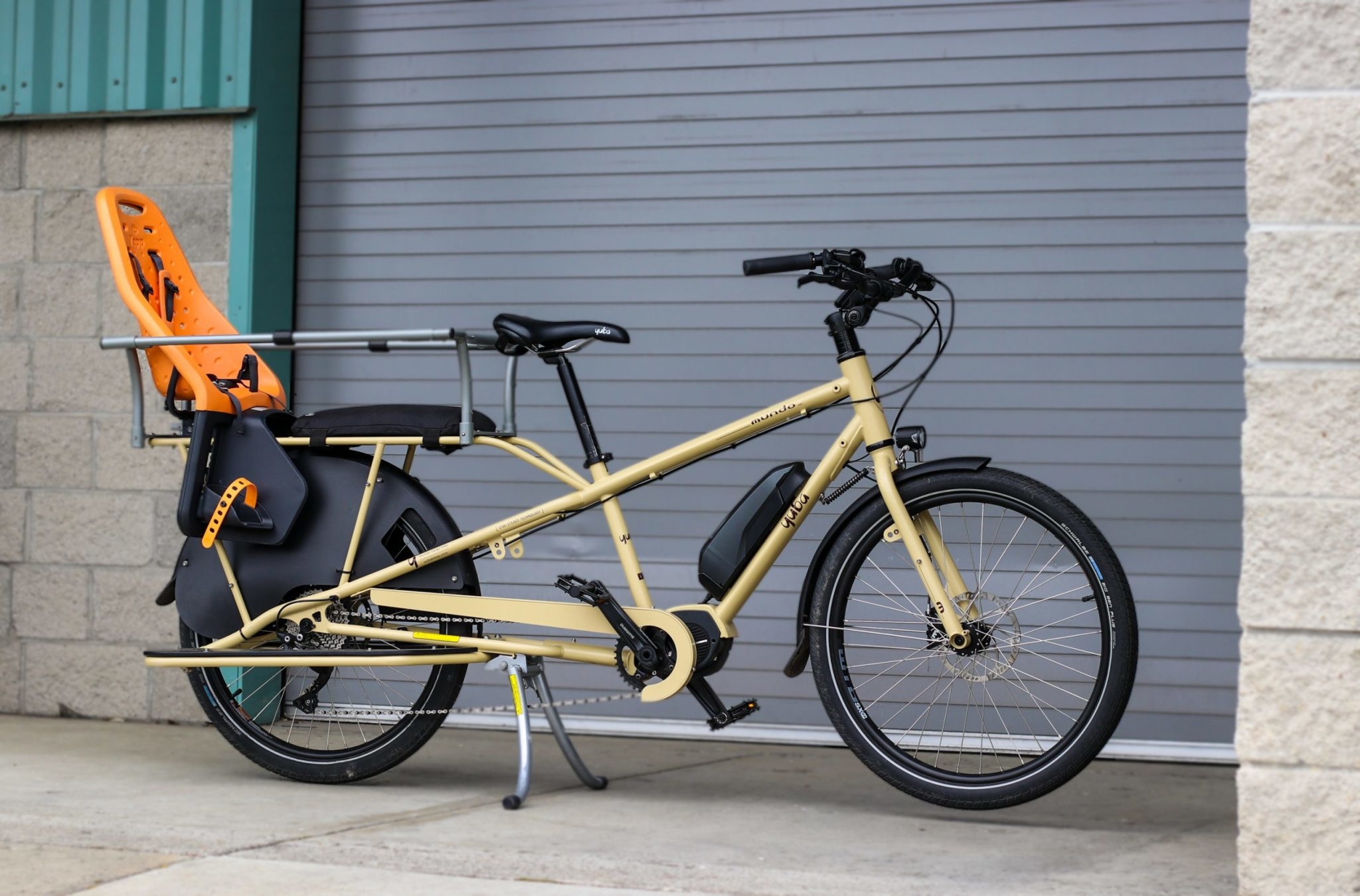

This law was prompted by an accident where a person driving children in an electric cart crossed train tracks into the path of an oncoming train, and 4 children were killed.
Electric 2-wheel scooters would be perfect for a lot of places in NL - places where there is already a shortage of bike parking, and places where if you park and lock your bike outside, it _will_ be stolen if it is halfway nice. At least with a folding scooter, you can take it inside with you easily. Plus you can take it onto a bus, which is not possible with a bike.
Normally the Dutch are pretty thoughtful about their approach to laws, but this one just makes no sense.