Pretty sure the complaints were about allowing wechat/alipay and gov/police to track you and your health status. There was no transparency in what was stored/transmit, whereas here it is all documented. Its a static QR code you can carry, rather than an app that does a lookup and phones home. The reader app only verifies the signatures used to sign the (limited) id info, doesnt send info back to the mothership, etc.
No, actually the complaint was that a central authority could, under the pretext of some obscure rule, forbid you access to certain or public services. The same concept applies here, whether it's open source or not.
We're not over it, the discussions were consistently buried and we skipped that part to "here's how the new QR systems work" to give the illusion of consent. They didn't even bother manufacturing consent this time. There was no healthy public discourse on it, just some states/countries banning them pre-emptively and some states taking for granted that you would accept it.
Pretty sure the complaints were as I mentioned - feel free to give links to the other discussions.
The "central authority" already do forbid you from accessing certain or public services for the same rules - only you need to provide the relevant paper documents. This is effectively the paperless version thereof.
You may personally disagree with the concept of proof of vaccination, but thats completely aside from the technical discussion we are having here.
Its not an aside, its centrally related. The technical version of the app enables the problematic activity to scale and thus the moral and ethical implications are centrally related to the technical implmenetation.
> are centrally related to the technical implmenetation.
You mean just like a centrally fabricated ID card that's used for entering an airport, making certain purchases, verifying ID for a CC purchase, entering the country, etc?
What public service does the government forbid me to access without my papers (except the ones where the document is needed to charge the state for the service - eg. medical stuff)?
Just a year ago, saying that the governments will require you to produce a "vaccination passport" to enter a restaurant was laughed at as a crazy conspiracy theory, and currently, the difference between a "crazy conspiracy theory" and "reality" is about 6-12 months.
"certain or public services" was the phrase the parent used. I just said the same rules apply as before. Maybe you are better off asking them for examples.
Most countries, for example, require vaccination for contagious diseases for a variety of public functions like attending school. The need to validate vaccination status for functions like boarding airplanes or attending large stadium events is just common sense, as certain populations are refusing vaccination for mostly irrational reasons.
These digital credentials allow people to conveniently provide this documentation in a reliable way.
>refusing vaccination for mostly irrational reasons
Depending on age and condition the risk to an individual can vary from one in ten million to under one in a hundred. In your mind, what is the risk that an individual must face from covid to make it rational to take a novel treatment with no long-term safety data that hasn't passed the standard FDA approval process? In any other context, would people here be so confident that there's a less than one in ten million risk from a novel MRNA treatment?
>certain populations are refusing vaccination for mostly irrational reasons.
It's not irrational for people to be cautious about a new treatment for which there's absolutely no data about long-term safety (can't know the 2-3 year effects of something that's only been around one year), which has bypassed normal treatment approval processes (the covid vaccines only have FDA emergency use authorisation, and have not yet passed the requirements for full FDA approval, requirements which are strict for a reason), for which some previous attempts have failed significantly (https://pubmed.ncbi.nlm.nih.gov/22536382/), to prevent a disease that for many people has less than a 1/100,000 to 1/1,000,000 fatality rate (https://www.medrxiv.org/content/10.1101/2020.05.17.20097410v...), ten to a hundred times less dangerous than giving birth.
The vaccines have regular approval in the EU by the EMA, the US approval is the odd case here. And there is no reason to expect a significant risk for side effects that only appear after several years, for vaccines they generally appear reasonably close to the date of the vaccination.
And you're seriously downplaying the risks of COVID-19 here, of course it is relatively harmless for very young people. But it is seriously dangerous for a large part of the population that is older.
>And you're seriously downplaying the risks of COVID-19 here, of course it is relatively harmless for very young people. But it is seriously dangerous for a large part of the population that is older.
It's not only "very young" people. Did you look at the link I provided? For people 20-30, it's around one in a hundred thousand. For people 30-50, it's around one in ten thousand (similar to giving birth). When someone's making a rational decision, it's with regard to their individual risk; the risk of covid to an eighty-year-old is irrelevant to a twenty-year-old deciding whether to take the vaccine, especially given the vaccine doesn't prevent them infecting others if they get it (see this data from the Singapore government: https://covid.viz.sg/ ).
>for vaccines they generally appear reasonably close to the date of the vaccination.
The MRNA vaccines are quite different from normal dead/live virus vaccines and have never been used at scale.
> The MRNA vaccines are quite different from normal dead/live virus vaccines and have never been used at scale.
Their closer relative, the viral vector vaccines (like J&J’s), have been. You’re right about calculating risk, but when’s the last time a vaccine in normal, longer term stage three trials resulted in a higher fatality rate than COVID (for any age group)? The link for the SARS vaccine candidate was a failure that was caught in a mouse model, which unsurprisingly they also did with the new vaccines before the human trials started. To echo the parent comment, these were immediate side effects on challenge (which would likely been caught in stage 2 trials even if they only happened in humans and not in animal models).
If we want to go with unusual reactions that only show up over time, what about the chance that whatever long term side effect you’re imagining from the vaccines instead happens for people who have been infected with COVID 5 years from now? Once you decide to make decisions based on rare and novel events with unquantifiable risks, you’ll find they show up absolutely everywhere if you’re being intellectually honest.
> given the vaccine doesn't prevent them infecting others if they get it (see this data from the Singapore government
That data’s N is a little low, but let’s take it seriously for a moment. The vast majority of vaccinated people in that dataset did not go on to infect others, and none of them were epicenters for super-spreader events. Eyeballing it, it’s consistent with a sterilizing immunity in excess of 80%. If the vaccines turn out to be that effective at preventing transmission, that’s an excellent outcome (it is higher than most vaccines).
>You’re right about calculating risk, but when’s the last time a vaccine in normal, longer term stage three trials resulted in a higher fatality rate than COVID (for any age group)? The link for the SARS vaccine candidate was a failure that was caught in a mouse model, which unsurprisingly they also did with the new vaccines before the human trials started. To echo the parent comment, these were immediate side effects on challenge (which would likely been caught in stage 2 trials even if they only happened in humans and not in animal models).
It's basically like saying: "the unit tests have all passed now, the regression tests all pass, so let's roll out the fix straight to prod, because it's urgent and we don't have enough time to do the normal amount of staging environment testing". Sure, probably it's fine. But mistakes happen. In any other context, a 1/100,000 chance of error would be considered incredibly low, a great achievement. But in this case, a 1/100,000 chance of seeing after 2-3 years a failure like happened early on in those previous trials would be an incredible tragedy, if the vaccine was taken by people with less than 1/100,000 chance of being killed by covid.
https://onlinelibrary.wiley.com/doi/10.1111/ijcp.13795 makes a better case than I can that "a finite, non-theoretical risk is evident in the medical literature that vaccine candidates composed of the SARS-CoV-2 viral spike and eliciting anti-SARS-CoV-2 antibodies, be they neutralising or not, place vaccinees at higher risk for more severe COVID-19 disease when they encounter circulating viruses"
>If we want to go with unusual reactions that only show up over time, what about the chance that whatever long term side effect you’re imagining from the vaccines instead happens for people who have been infected with COVID 5 years from now? Once you decide to make decisions based on rare and novel events with unquantifiable risks, you’ll find they show up absolutely everywhere if you’re being intellectually honest.
The difference is that covid does not have a big qualitative difference from other respiratory viruses, and no circulating respiratory viruses are known to cause serious long-term symptoms in people who were short-term asymptomatic. Whereas the MRNA treatment is quite a different mechanism from previous vaccines.
Separately, ethically it's generally considered worse if a death results from deliberate human action than from an "act of nature". E.g. nowhere is it morally acceptable to murder somebody just because their organs could be used to save ten people. In this case that means it would be considered morally worse if people were coerced into taking a vaccine that ended up killing them than if, absent the vaccine, they died from natural causes of equivalent risk.
>That data’s N is a little low, but let’s take it seriously for a moment. The vast majority of vaccinated people in that dataset did not go on to infect others, and none of them were epicenters for super-spreader events. Eyeballing it, it’s consistent with a sterilizing immunity in excess of 80%. If the vaccines turn out to be that effective at preventing transmission, that’s an excellent outcome (it is higher than most vaccines).
There's one super-spreader there, a prison cook. I pulled the data from the backing rest API (if you want I could upload the notebook and show you):
    pd.Series(vax_links).describe()
    count    17.000000
    mean      2.705882
    std       3.670230
    min       1.000000
    25%       1.000000
    50%       1.000000
    75%       2.000000
    max      14.000000
    dtype: float64

    pd.Series(unvax_links).describe()
    count    127.000000
    mean       2.181102
    std        1.965647
    min        1.000000
    25%        1.000000
    50%        2.000000
    75%        2.000000
    max       15.000000
    dtype: float64
While there are way fewer vax cases than unvax cases, looking at the average number of infectees it doesn't appear that vaccinated people infect fewer on average than the unvaccinated do, at least given the limited data.
The thing about covid is that you can't consider just the individual risk, you have to also think about the fact that this is contagious, so if you don't actively try to stop it, it will kill many more people.
So yes, chances are I wouldn't die if I didn't vaccinate, but chances are I would kill my grandma if I caught covid.
Wouldn't she be vaccinated at this point? And if we assume some people can't be vaccinated for health reasons and that we have to take the vaccine to protect them... Isn't it pretty awful that they will be denied access to most public places because they don't have a vaccination proof?
If anything, it's irrational that people who would normally refuse to take a novel treatment that has not passed standard FDA approval procedures would suddenly decide to take it just to minimise a one-in-a-hundred-thousand risk, a risk lower than many other risks people usually take like giving birth and driving.
> which has bypassed normal treatment approval processes (the covid vaccines only have FDA emergency use authorisation, and have not yet passed the requirements for full FDA approval, requirements which are strict for a reason),
FDA approvals are largely based on the ability to provide reliable test cases. You literally have the largest test case known to human history. No amount additional FDA testing is going to make that change.
> to prevent a disease that for many people has less than a 1/100,000 to 1/1,000,000 fatality rate
This figure is meaningless. We have a steady history of "excess deaths" and can predict what annual death rates are on average on a yearly basis. This number jumped significantly even with mask mandates, lockdowns, etc over the last 18 months:
>FDA approvals are largely based on the ability to provide reliable test cases. You literally have the largest test case known to human history.
Nine women can't have a baby in one month. A billion test cases for short-term side effects still aren't test cases for long-term side effects.
>This figure is meaningless. We have a steady history of "excess deaths" and can predict what annual death rates are on average on a yearly basis. This number jumped significantly even with mask mandates, lockdowns, etc over the last 18 months:
For making a rational decision, the figure to use is the personal risk to the individual. Using excess deaths is meaningless, because if the vast majority of those deaths were in old and overweight individuals and you're neither, then those numbers are irrelevant to quantifying the risk you face.
Yes, and I'll take any reasonable precaution I can to avoid getting COVID: social distancing, wearing a mask, regularly using disinfectant, working from home, etc.
Businesses have shown an enormous appetite for hoovering up personal information. Why are you sure that businesses won't use an alternative verification app that stores the names and dates of births, shares them with their marketing partners, etc.?
The problem with the GDPR is that it is only as good as the authority enforcing it. There are complex rules (from memory about a third of the text, but it is a while since I read it all and this was the bit I was least interested in) on which authority is the one in question that means you can somewhat choose your authority, and some of them are not enforcing it at all. This is how Facebook and Google etc are able to do things that clearly violate it I think.
Does it have access to a passport ID? Image database?
How is the one verifying the validity of the certificate supposed to check if it's actually the holder of the certificate standing in front to clear admission?
You show your photo ID, and the person that is checking looks if the name on your ID matches the name in the QR code. The reader Apps are dumb, they only show the content of the QR code and verify that the signature is valid.
Your granny doesn’t need to verify this, these are used by employees of venues that want to limit access to their facilities to people who are either vaccinated or tested negatively.
I'm talking about people like me or my grandmother who want to verify that the guard at a club uses application that works fully offline and doesn't save any data - the QR code we're handing over contains our personal data and on top of that we're actually cryptographically verifying our whereabouts while using it, so I want to be absolutely sure the government doesn't have access directly without a court order. // yes I have had a real, serious problem with the government using data it got for other purposes against me for its own gain (I won the court, but it nearly destroyed my life and I'm still not where I was before and won't be for a long time).
I'm pretty sure the guard doesn't give a flying fuck about my personal information, just like the programmers - so how do I verify myself? Or am I to stay at home forever if I care about my privacy? The EU said very different things about these issues, is that forgotten now? The same goes for the other identity-related EU initiatives, where did all the talk about privacy go? Was it just propaganda, because it certainly seems so now, as there are so many so obvious loopholes it can't be an accident?
I don't know in what country you are, but mine (the Netherlands) has open-sourced everything around the corona-check apps, including backend, design, etc. on GitHub (https://github.com/minvws).
If you or your granny aren't good at reading code, you just have to trust that other members of the public who are would have made some noise in the media if something fishy was going on.
Many forms of ID also have some form of NFC/RFID to read out data wirelessly. I don't know why you'd buy something to do it automatically, but you totally could.
You'd still end up comparing a picture to someone's face, though, so you can't really remove the middle man without going into some dangerous facial recognition tech.
Name+DOB in digital form is more than enough to track people, even with an offline verification process: We can expect that any number of "interested parties" will attempt to get access to the computer systems of venues operating these QR code scanners, or of their suppliers.
Having someone at the door look at a paper ICVP and a photo ID with their analog eyes has much better privacy properties. (Still bad though.)
The verifier app is a dumb app that simply verifies the signature of the QR code payload and displays the relevant info on screen, which they look at with their analog eyes and compare to the photo id. The only network activity and/or storage is related to downloading the public keys of the issuing authorities.
My point was that once you make that data machine-readable, it's not good enough to have privacy-by-policy of not storing it - IT security being what it is.
Ah, the threat of the imaginary hackers ("interested parties").
The QR code scanners will probably just be the official app installed on smartphones the venue will need to supply to the security personnel. Who's going to hack this? Banks can already track your credit card payments to figure out your profile, Google can track your location through your phone. Russian, Chinese or North Korean hackers probably don't care about where you spend your evenings.
"The imaginary is that which tends to become real" -André Breton
> Banks can already track your credit card payments to figure out your profile, Google can track your location through your phone.
For people who don't even avoid these easily defeated tracking vectors (with cash and de-googling), sure, vaccine passport tracking won't make a big difference.
Groan, "let me put a random name to some saying to justify my actions"...
Just because you can find a quote you think is profound and attach a name to it, doesn't justify super-paranoia. Do you get out of the house, or are you avoiding the virus? Life's about judging risks and benefits, and IMO you're way overblowing the risk of these hackers. What Andre Breton thinks is irrelevant.
It links 'a person' to 'a piece of health information'. Imagine what you or any data platform could do with that (big) data.
Here we hide personal health information in a QR code and are expected to give random strangers 'consent' to this personal data to gain 'access' to a venue or 'service'.
Yes, The name and date of birth are linked to a number of vaccinations,
AND the exact vaccine,
AND date it was administered,
AND the country it was administered, (I also now have a good guess about you nationality)
AND the disease the vaccine works against.
Do you really need to know the last four if you all you really want to know if the identified person should be granted access?
But that’s the exact information I want to pass to someone?
I’m not sure how else to give someone the information that person X has had vaccine Y, other than actually transmitting that exact information?
Yes, it’s (slightly) sensitive information. But if one decides that we want to have a system based on this exact information, and it had to be “offline capable”, what are the options?
> Do you really need to know the last four if you all you really want to know if the identified person should be granted access?
If the requirements are that verifiers must themselves be able to decide which vaccines are acceptable, number of doses or time since last dose, and which issuers are allowed, then yes.
Generally speaking - I am suggesting that there was a coordinated effort to utilize the pandemic in order to better ID and track outside of the traditional means (ie. advertising to consumers) - they need to fix the ID problem so to speak (ie...online anonymity) - they want to final mile everything.....so they can fully track everything.
The pandemic was the perfect opportunity - so they coordinated between big tech and government to setup more and more tracking systems - Apple and Google knew ahead of time, just like the politicians and CEOs who ran before the announcement with buckets of share sales....
And then there is the solidarity and collective front to ensure that no dissent was heard (ie...fact checkers) and cartel like collusion between platforms to silence and coordinate news.
Then there is the fact that they have managed to make health and science immune to the forces of criticism and public disclosure....
or how about the media sucking at the tit of big tech for years trying to get at that sweet sweet ad nector....
you're comparing a signed certificate that exist locally with a credit score that continuously update centrally and track your behavior across your social interaction with the government, third private entity and your peers
and both are terrible when used to stop and restrict people and descriminate.....both which are done blatantly and in the open yet no one cares.....I call you a mean word and I am bad guy....people are regarded..
The moral high ground is that the EU Covid pass is basically only a convenience: the exercise of fundamental rights is untouched by this:
> Will citizens who are not yet vaccinated be able to travel to another EU country?
> Yes. The EU Digital COVID Certificate should facilitate free movement inside the EU. It will not be a pre-condition to free movement, which is a fundamental right in the EU.
Compare this to pre covid travel, and yes, it affects us greatly. Since pretty much all the countries have very low covid numbers, any such limitations are stupid.
That's nothing but a strawman. You don't have to get tested every 48 hours. You'll have to get tested if you intend to meet other people up close that you'd risk infecting with Covid, unless you're healthy.
That's simply an assurance for all those that cannot get vaccinated, and a low price to pay for a controlled return back to normality, without sacrificing everything we've achieved over the last months.
No, don't. What we are talking here about is a Covid pass / QR code thing, not the pre-pandemic past.
> Since pretty much all the countries have very low covid numbers, any such limitations are stupid.
In just the Europe, Russia and UK have horrible numbers right now, Portugal joining them. So no, you are wrong, I am sorry but the testing/vaccine/quarantine rules make sense and will make sense in the foreseeable future.
Currently, each country does its own QR thing, a fair amount of which is just a link to some .gov.* website. Unifying it under one model makes sense. It makes it easier to verify and issue new EU QR codes. Otherwise, when presented with a proof, verifiers would have to know how to properly verify 20+ different QR codes.
So we've got two realistic options: 1) non-EU countries teach people their own and the EU verification method, or 2) non-EU countries offer a way to "convert" EU QR scheme to their own at the point of entry.
It's similar the other way around as well, because non-EU countries could either start issuing EU-compatible QR codes, or recepients could "convert" them to the EU-compatible QR code at the point of entry.
> And, does this "EU Green Pass" work in UK or russia?
No, UK/Russia are an example that we are not yet safe. In fact, the current numbers in Portugal are a direct result of influx of visitors from the UK who imported the Delta variant there.
> we're striving for the prepandemic way of life
Yes, as soon as the virus is not a big threat, we can resume the prepandemic way of life. If you look at the current numbers of people getting sick and dying from Covid, it should be clear we are not there yet.
But the Covid pass is a part of normalizing the situation. I will travel in July to a vacation. I will carry the covid pass with me and as a result of that, I will not have to be tested (several times) or quarantined, despite traveling through several international (Schengen) borders.
What a ridiculous statement, Europe doesn't need to import the virus or any of it's variants when it's been a global hotspot for a year now. I guess it's nothing new though, contact tracing has been mostly used to shift the blame to an "outgroup" and seems to have worked in around 2 countries out of the hundred who tried doing it
Freedom is the high ground. You can feel superior or safer in the knowledge that the government deploys strong tech to monitor and control you (in the name of public safety, of course) all you want.
I'm vaccinated, the vaccine works, and I'm living accordingly. If a business wants proof, they don't get my business.
I agree. Seeing stuff like this take hold is both scary and tragic to me.
It feels like a genuine turning point for our way of life when the government can control your life unless you have a brand new medical procedure which, with no hyperbole, can kill healthy people at no significant risk from the disease.
I’m amazed how popular it seems to be here and the fact you have downvotes. This community like to tear companies like Facebook apart but cannot see the risks and impacts of what we are doing here?
I grew up in Australia, thinking Americans were crazy for their obsession with guns. In the past year my opinion changed completely, after seeing the US states with high gun ownership like Florida and Texas are some of the few places in the world where this authoritarianism hasn't taken hold.
I'm not sure those states are good examples when their governors were happy to impose restrictions on private businesses and remove their freedom of choice wrt proof of vaccination - to the complaint of the Cato Institute, no less.
The US is a bit different than portrayed. Even in Illinois, most of the state is hard red. They have “2nd amendment sanctuary counties”. Masking, gun laws, etc aren’t followed in the country, even suburbs.
Honestly, there’s a good reason people in Illinois believe their elections are stolen (there’s lots of historic proof). It’s an open secret that the democrats steal the state. If you ask around, almost everyone believes it.
To be fair, Illinois has jailed a significant number of governors lol
I'm amazed at the amount of discussion, period. The article factually laid out the small amount of information encoded in the QR code, walked through the data format, and showed it to be pretty minimal and well-designed. No URLs, no hidden trackers, no evil ad salesman selling your browser history. Yet here we are at the #1 spot on HN and almost 400 comments. Full of conspiracy theories, COVID-downplayers and anti-vaxxers. I'm trying to connect the dots between a QR code and the New World Order, and I'm coming up empty. I thought HN was above this and wish this stuff could stay on Facebook and Twitter.
> I'm amazed at the amount of discussion, period. The article factually laid out the small amount of information encoded in the QR code, walked through the data format, and showed it to be pretty minimal and well-designed. No URLs, no hidden trackers, no evil ad salesman selling your browser history. Yet here we are at the #1 spot on HN and almost 400 comments. Full of conspiracy theories, COVID-downplayers and anti-vaxxers. I'm trying to connect the dots between a QR code and the New World Order, and I'm coming up empty. I thought HN was above this and wish this stuff could stay on Facebook and Twitter.
No one cares about the qr codes themselves and I think you are willingly ignoring the main point. The problem is that you need to show a government issued "pass" to access almost any public space. You may be okay with that but please don't pretend it's nothing new and it's always been like that. Asking for a digital certificate to live your life normally is unprecedented, but I guess at least it's not ads? Who talked about that anyways, can't both things be bad? I guess what the NSA does is alright since it's unrelated to a new world order or ad tracking?
As for antivaxxers or covid downplayers, Imo pretending this whole apparatus is needed is the real anti vaxxer position. The vaccines work, and if someone doesn't want to take them the risk is on them. Downplaying covid now is the pro vax position, while yours imply vaccines barely work so we need precedent setting measures like these. I mean the comment that started this subthread is literally saying that vaccines work so the straw man you are building is absurd
It's because we let them say opinions were more important than freedoms....that's that. once people drank the coolaid....Jonestown was on....we are watching the suicide of our society in the name of progress......because to not progress is (enter fad strawman of the day - .... right now ultra right wing conspiracy....)
We need this passport so that we maximize the potential of vaccines and minimize that of virus mutations. I say this selfishly: I want to travel and when the risk that visitors will bringing a supertransmissible virus deadly to the population is high (and 0.5% is a shitton of people), we'll again have lockdowns and we'll be sitting at home. I don't want any of that. That's why I got vaccinated and I'm happy to have a way of proving that it's very unlikely for me to bring crap that will kill people down the line
In what world is stopping a deadly disease that also paralyzes healthcare for everyone abuse? The virus is abusing us, that's for sure. Unfortunately it doesn't quite adhere to law, otherwise tens of thousands of people more would still be alive in my country. The only way to stand up to a force of nature like that is to stick to some common sense rules as a society, like "let's avoid crowds" or "let's all get vaccines".
Terrorism very broadly kills a couple hundred people a year in the developed world, and has been around that for a long time. Obviously it's a bogus excuse most of the time.
Meanwhile, this particular virus has correspondingly killed ~10 000 times more people. That is not hyperbole. That's not even comparable to terrorism, much more like a war instead.
Perhaps somewhat paradoxically, much fewer than usual. Partly because some that might have, in stead died from Covid-19, and partly because the countermeasures against SARS-CoV are also very effective against a lot of other diseases like the flu.
Why; does that have anything to do with anything? Naah, thought not.
A number of politicians have already declared that we need to become "more like China". Not sure what Soros' current position on this is, as he clearely warned of China's social credit score system in 2019.


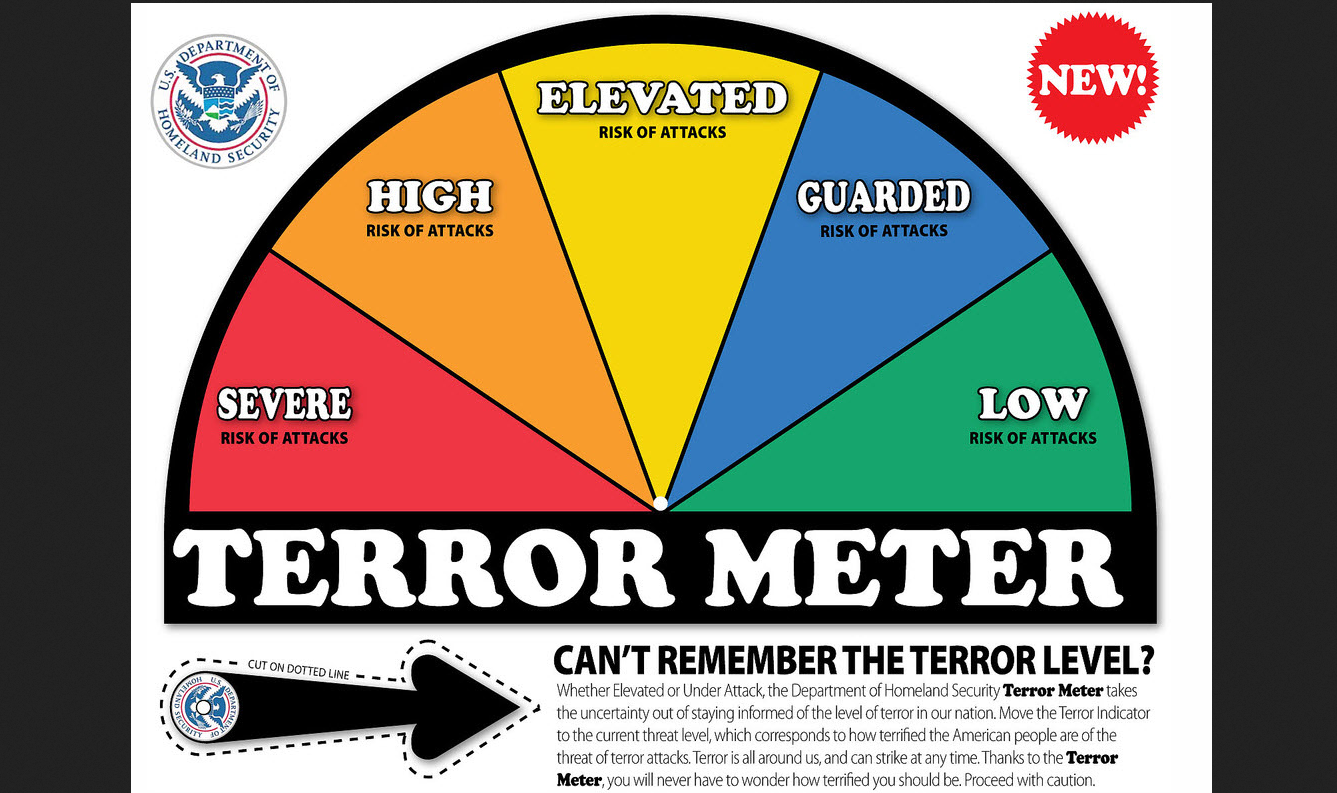
What exactly is the moral high ground we stand on?