Go back and read Adam Smith. The thing we don't appreciate today is that having more children used to be an investment -- not just in the idea of family, but literally an investment, as kids would grow up enough to start producing more resources than they cost pretty quickly, and were a net contributor to the family.
Nowadays, having kids is wonderful and great and fulfilling and life-changing and all those things -- but economically a disaster.
It is therefore unsurprising that there are so many fewer children. You have to really want them.
Oh, for sure, having children stopped being net-economically-positive long ago -- though the degree to which it is net-economically-negative seems like it has kept increasing, as our expectations of an acceptable childhood keep growing.
I don't think going from 2.x kids per family to 1.x or even lower was mostly about money. It's about opportunity costs (and the resource that you must allocate between the alternatives is mostly time).
To put it differently: in 80s your standard of living was X no matter if you had kids.
Now if you have kids it's 2X and if you don't it's 5X (assuming the same effort).
That's why giving people with kids enough money to survive don't help much. It changes it from 2X vs 5X to 2.1X vs 5X. Maybe 3X vs 5X if you're very generous.
This is really about economics. 100 years ago, having a kid produced more resources. 40 years ago, it was relatively close to neutral ("X no matter if you had kids"). Now, it's super strongly negative.
If that was the case - big social spending would increase natural growth significantly. But it doesn't.
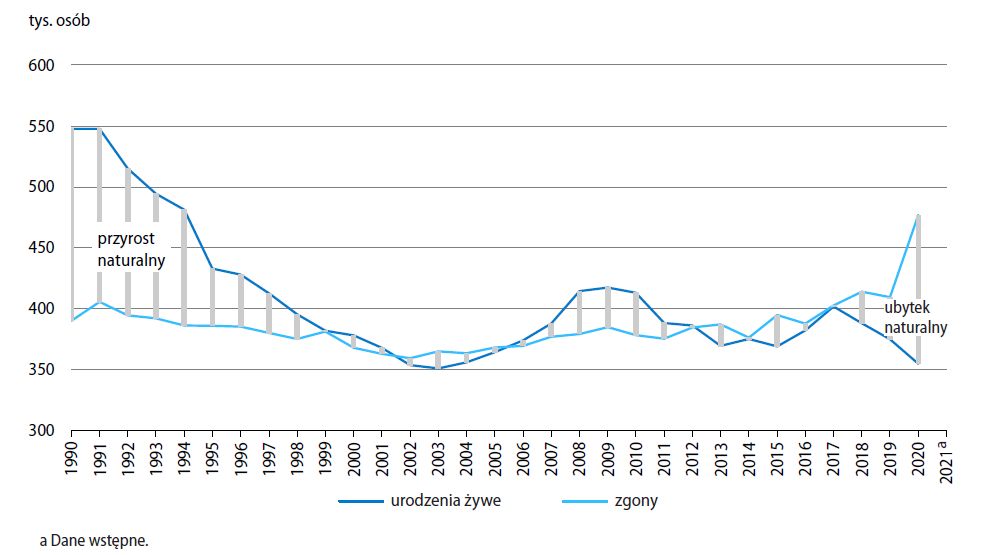
For example in Poland in 2015 a new social program was introduced. Parents get paid 500 PLN for each kid each month till it's 18 years old. At the time the median wage was under 2500 PLN for comparison. So 2 kids increased your earnings by 20%-40% (depending if both parents work).
Natural growth increased by 3.5% for 1 year and quickly returned to the trend. You can't even guess on the graph when it was introduced [1]
Our paper economies are not in tune with reality. They were made to serve people. If there are fewer people with fewer relationships and our economies value numbers over creating happy families, our metrics and economies are broken.
It did not take material wealth or years of checkbox regulated planning to raise a happy family in the past and it does not take it now.
The decline in birthrates is a world wide values and time allocation problem. We do not prioritize relationships and community building, we prioritize immediate gratification and status seeking.
All that an economy should do is manage the logistics of a higher purpose.


Nowadays, having kids is wonderful and great and fulfilling and life-changing and all those things -- but economically a disaster.
It is therefore unsurprising that there are so many fewer children. You have to really want them.