Hard to believe USB-PD upses aren't a common products.
There's no reason anymore that a power bank should ever even have an off mode unless it's so cheap there's no passthrough, which shouldn't be a thing either because it's annoying and probably saves 50 cents.
It's microamps with a good eco mode switcher.
Inline USB ultracapacitor banks seem like a reasonable product too though.
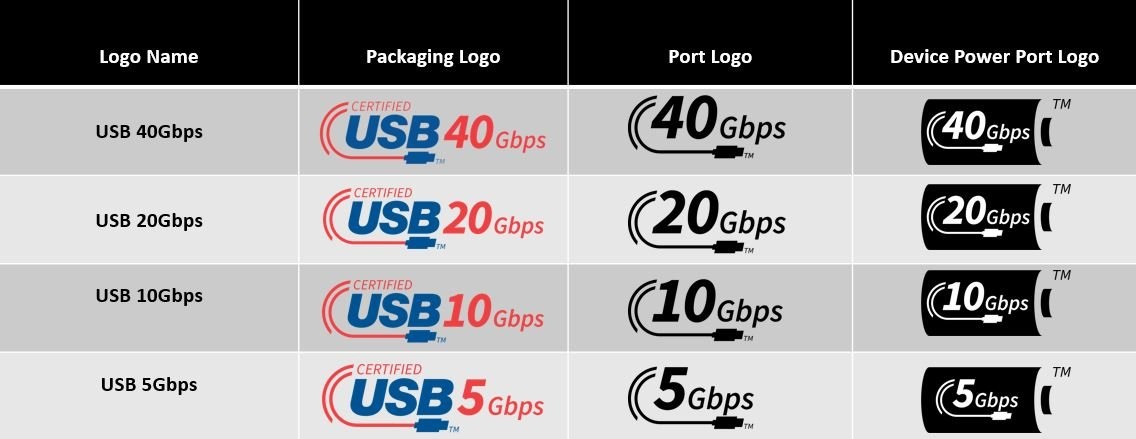
Hopefully USB will give us standards for power banks someday so you can get certified ones with a defined form factor and behavior.
Yes, but between Revision 11 and 12, all manufacturers on the consortium unanimously voted to up all voltages by 0.4V to increase incompatibility. Still the same gbps though.
There's something sort of horrifying in the fact that I can't tell if the posts in this thread are real ... or fake in pretending to be a bureaucratic, ridiculous joke.
Anker has a power bank with integrated charger[0], or charger with built in power bank. Don't think it's made to be used as a UPS, but maybe it can be.
> Inline USB ultracapacitor banks seem like a reasonable product too though.
I actually saw just that in a GreatScott Youtube video about Aliexpress gadgets just the other day[1]. Not sold as a UPS, but rather a power filter or buffer.
Laptops can run off of any USB-C power bank now, so it's no surprise there's no market for something like this. Cool product though!
It's on the line voltage side like any other UPS, so not as efficient as you could be with a solution that didn't have to convert AC to DC then back to AC then to DC again in the brick. But with Apple's proprietary charging connector soldered to the device end of the brick, what else can you do about it?
Exactly, even 5000mah in your standard USB-PD 60w adapter would be a huge boon, especially for laptops where the internal battery has begun to fail and replacing the battery means replacing half the laptop, app..cough..le
> replacing the battery means replacing half the laptop, app..cough..le
These kind of comments are surprisingly common on HN and annoy me slightly.
Yes, most phones and laptops do not have user replaceable batteries anymore. It's a pity. That does not mean a dead battery is a justification to throw away fine equipment.
Any phone repair shop or computer shop can replace batteries. They usually have all the equipment and spare parts, even more so for popular Apple devices. It usually takes half an hour and costs way less than replacing the whole device.
I always recommend that to friends and family because most of them are not even aware this is possible. They usually thank me later saying how painless and affordable it was to give a second life to their devices.
I did not say it's justification for throwing away old equipment, but at some point, the high cost of replacing a battery (high because it requires a 'repair') offers less value than buying a newer model. This is especially the case with, say, Apple laptops where the official battery replacement means the entire top-case and keyboard has to be replaced.
A good way to keep these devices in use would be with an external battery, and one built into the power adapter would be very convenient. Just an hour of power would be enough to move around to meetings without multiple reboots.
I just did a battery replacement on a 2017 MBP. While there were a lot of screws needing to be removed and lots of lifting/prying to get to cables, half the laptop did not need to be replaced.
Assuming the default failure mode of the battery is degraded capacity. Over the years I've had an alarming number of lithium-polymer batteries puff out in consumer devices ranging from my Dell XPS 13 (9343 model, battery was replaced three times) to the Moto Z Play phone (dislocated the screen, replaced twice by Asurion, third time they claimed it was a warranty issue and played support tennis with Verizon) to an iPod
Touch (also popped the screen out).
For some reason I still cannot fathom, the 50-cent saving is a point of great pride to electrical engineers. They repeat some phrases about million-unit manufacturing runs and I just seethe with anger that we can't have nice things.
You can have nicer things, you just have to pay for it.
But because of economies of scale, you don’t just pay the difference in BOM cost, you pay that difference plus the difference in fixed costs divided by a much smaller unit run.
USB UPSes exist, and they’re really not that niche. Amazon has one for $50. That’s mass-market pricing as far as electronics are concerned.
As far as I can tell, there are a few no-name DC-only ups systems, but it would be really nice to have a USB-only DC-only ups that did things like USB-C with PD.
Good case study for Harvard Business School. When a design engineer wants to cut a feature to save a few pennies, they are teamed with a marketing pair-analyst to assess the TAM and margins, considered holistically with other feature subsets.
> 50-cent saving is a point of great pride to electrical engineers
As an engineer you are given a power budget, a thermal budget, a size budget, a weight budget and a monetary budget, among many other constraints. This means, like any engineering endeavor, there are tradeoffs to make. That 50-cents you saved on some power controller might be "spent" somewhere else that has a higher impact on the product.
There is a near infinite set of things you can do to make the product better somehow. Unfortunately you don't get to do them all. Many of the things conflict with eachother--more battery life might mean more weight and size that you have to "steal" from some other aspect of the product to balance out. Faster, better charging might cost 50-cents but that might mean in order to stay on budget you'd have to use a lower quality plastic shell that is more prone to damage. That faster, better charging might also eat into your thermal budget, meaning you'll need to spend more on cooling, weight and size.
I imagine it's a similar feeling of pride felt by the engineers who design outdoors equipment that only fits in the provided container when folded precisely how it was at the factory with no margin for error.
I was amazed when I learned that most powerbanks do not function that way. Some of them will switch modes if you unplug them, but there is still an interruption.
It is so nice to be able to unplug my Pi to move it, and have it stay on. I also use them for my usb powered wifi security cameras. So far they have not failed me.
> Hard to believe USB-PD upses aren't a common products.
Insanely easy to believe. The role of UPS is to prevent data loss when power fails. If something is powered by USB-C it almost always already have its own battery preventing from that.
The only devices that are not are stuff like say, raspberry Pi
Also, there literally are devices like that, just aimed more at stuff like camping, so much bigger battery, usually an inverter on board and solar input.
> Hopefully USB will give us standards for power banks someday so you can get certified ones with a defined form factor and behavior.
If it will be like USB-PD then it will be insanely overcomplicated and nobody will be able to get it right.
> The role of UPS is to prevent data loss when power fails. If something is powered by USB-C it almost always already have its own battery preventing from that.
That's a very narrow minded approach to both UPSs and items using USB as their power plug imo.
A UPS isn't just "to prevent data loss when power fails." It's also to keep critical (for home, not DC) things running in the event of power outages. Current uses for USB-C power banks as UPSs I have (or have recommended to friends) that aren't "to prevent data loss".
- Power bank running as a UPS on (a few critical) wireless security cameras (that use USB-C for power).
- Power bank running as a UPS on my cats water fountain (uses USB for power), if the power goes out she still needs to drink water, and I may not be home to put down a standard bowl.
- Friend has a baby monitor and took my idea of using a USB power bank as a battery backup on the camera and monitor so that if his power goes out he can still keep tabs on his child. (no sense waking her up to move her if he doesn't have to)
> Insanely easy to believe. The role of UPS is to prevent data loss when power fails. If something is powered by USB-C it almost always already have its own battery preventing from that.
That's a moot point though, IMO. Like if you're travelling, wouldn't it be nice if your charger and your battery bank were the same device? Just because it doesn't have the same specific utility as a UPS, doesn't mean that it's not useful in other ways.
There may be a market for an ATX USB-PD power supply. My desktop has no spinning rust nor discrete video card. A 60 watt power supply could power it easily, especially if there were a small lipo for the occasional burst.
Solar generators aren't specified to be UPSes. Some work, some don't, just like power banks. I love them, but they're not always perfect.
Raspberry Pis are common though. They've taken over like half of DIY electronics and home servers, for a good reason, everything else is way more hassle and less supported.
Not sure why you say PD is overcomplicated. Until you get above 30 to 60w where not everything supports it, stuff just works. Their only big mistake I see is not keeping the 12v power tier.
WAY too many things run on 12v and losing the ability to easily run legacy stuff sucked. But they'll fix that when 12v PPS trigger modules are available, for some reason they are not currently.


There's no reason anymore that a power bank should ever even have an off mode unless it's so cheap there's no passthrough, which shouldn't be a thing either because it's annoying and probably saves 50 cents.
It's microamps with a good eco mode switcher.
Inline USB ultracapacitor banks seem like a reasonable product too though.
Hopefully USB will give us standards for power banks someday so you can get certified ones with a defined form factor and behavior.