As a non-American, I've always been surprised with how common HOAs are, and how over-bearing they seem.
I know that I only hear about the crazy ones because blogs about normal/good HOAs aren't going viral, but I've seen enough horror stories that if I ever moved to the US I would do my best to avoid one like the plague.
I’ve lived in two. They were fine. They collected reasonable dues, provided some services, and that’s about the extent of it.
I still wouldn’t want to live in another one. Even if they behave well, they’re just annoying. It’s another set of de facto laws I have to keep track of, elections to vote in, proceedings to follow. The HOA’s finances are my finances so if they screw up it’s my wallet on the line. (I see so many people asking, the HOA fucked up, can they make us pay for it? You are the HOA, there’s nobody else to pay for anything.)
And they’re just not necessary in most places. Maintain common areas? We have something for that already, it’s called local government. Prevent eyesores? Fuck off, if you want to control what happens on a property then buy it. It’s unavoidable for a condo, but completely unnecessary for detached houses, and even townhouses don’t really need one.
You hear the bad stories. It all depends on who was elected and who votes. Most HOAs are not the horror stories you hear, just a quiet entity that maintains common property and is a backup solution for problems (when talking to neighbor does not work). Mine is cheap, like $300/year and we have a shared park, community space, and where I live lots of irrigation. They only send out letters for egregious violations and don't police or nit-pick.
If I had to pick one thing I dislike the most about HOAs, it would be this. There is never a guarantee that your quiet HOA will remain that way in the future. Which, to me, seems like a crazy chance to take.
>we have a shared park, community space, and where I live lots of irrigation.
This is where my confusion comes in. My local government handles this sort of stuff. But I understand that we (as countries) have different thoughts on governments and their responsibilities.
> >It all depends on who was elected and who votes.
> If I had to pick one thing I dislike the most about HOAs, it would be this. There is never a guarantee that your quiet HOA will remain that way in the future. Which, to me, seems like a crazy chance to take.
Exactly this. HOA boards have a great tendency to attract the interests of the most busy-body, have to dictate to everyone what they do, Karen's that exist in the area covered by the HOA. Such that, over time, the original HOA that just maintained common areas and only got involved in egregious violations mutates into one that has rules specifying exactly where, by measurement, you are to position your trash container in relation to your garage door when it is not out front for trash pickup day. One of the worst offenders of HOA's near me has exactly that rule (position of trash container in relation to garage door) and the HOA has paid "inspectors" to drive around each trash pickup day after the HOA decreed time that the container should be returned to this location, to look for violations of the position and write folks up.
There was an entire story in the local newspaper about this pettiness on the part of this particular HOA (which is how I learned they had "trash can position relative to garage door" rules and that they had paid "inspectors" to monitor compliance).
And all it takes is for those with "controlling personality disorder" [1] to start running, and getting, elected to the HOA boards for this to happen. And for most HOA areas, the only population group even interested in running for HOA board member are the "controlling personality disorder" types. So no matter who one votes for, the HOA slowly mutates into a "control everyone, everywhere, all the time" one.
[1] I.e., those personality types that want to control everything that someone else is allowed to do.
There are plenty of city owned spaces as well, it's not all HOA run. I suppose I would ask if it's fair for a voter on the other side of town to pay for irrigation on my street?
What's stopping them from charging you $3000 or even $10000 next year, or escalating progressively to these numbers? What's stopping them from adding ten new ridiculous rules? Nothing. It's about giving up your freedom.
The answer to that is always "you". Well, collectively.
An HOA isn't a separate body with no stake in the properties involved—that would be a property management company or something similar. It's a body made up of the people who actually live there. So while they could potentially charge you $3000 or $10,000 in bullshit fines for something they decided you did, they (usually) can't realistically charge you $3000 for dues without charging the same to everyone. Including themselves.
That said, there are definitely circumstances where an HOA is fully captured by a small clique of highly-active, highly-entitled, power-mad people with too much time on their hands and too little common sense or compassion, and they can't be gotten rid of either because of byzantine bylaws or because they actually are a majority of the people in the neighborhood.
Sometimes, this won't matter, because "they" are making millions a year (or are married to someone who is—often, toxic HOA members are stay-at-home spouses with little else to occupy them), so I'm not saying this doesn't happen, but we're not talking about some third-party management company raising prices so that they make more profit. We're talking about a cooperative raising fees for its own members—including the board members—which go into the common coffers.
Unless, y'know, we're talking about active embezzlement. Which does happen, but is obviously a failure mode and not normal operation.
In some places they act as a kind of local governing authority similar to a town or village council. In much of the US the lowest level of governing body us the county, and those can be pretty huge and diverse areas so HOAs are used to fill that gap.
Sure, I guess I can kind of understand that. It's just not something I've experienced. I've never felt that there was a "gap" that needed to be filled. Especially not by a group that can also tell me that my paint has to be a certain color or whatever.
Things like maintaining a community’s cohesiveness (eg via restricting exterior cosmetic changes, requiring lawn maintenance, etc) are in the HOA contract in an effort to maintain/increase the community’s home values over time. And, of course, people can choose not to buy a home in a community like this if they don’t agree to the provisions of the HOA.
Even before the 2021 surge in home values, homes on city streets almost never saw as much growth in value (except for homes in the heart of metro areas where people will pay for location to work. On suburban city blocks, home values are often stagnant even in good markets)
> And, of course, people can choose not to buy a home in a community like this if they don’t agree to the provisions of the HOA.
One of the common problems I've heard of (not firsthand, so this may be apocryphal—but it wasn't just once that I heard it) is that buyers don't get to see the HOA agreement, or even know it exists, until after they've bought the property. (IIRC, the situations where the latter was the case were either buyers not reading their purchase contract closely enough, and thus missing the actual requirement to agree to the HOA, or neighborhoods where the HOA was not legally required, but if you didn't join it they'd gang up and make your life a living hell.)
They're not common everywhere in the US. Here in West Michigan I don't know of anyone that's part of one (other than condo associations, where it's part of the selling point).
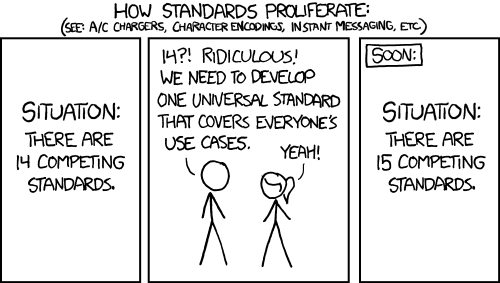
America hates government and taxes but occasionally someone thinks wow, it’d be nice if we could split the costs of this road and water pipes we all use! But all the existing standards for how to do this basic function of society are terrible!


I know that I only hear about the crazy ones because blogs about normal/good HOAs aren't going viral, but I've seen enough horror stories that if I ever moved to the US I would do my best to avoid one like the plague.