I obviously don't know what I'm talking about, but my main concern is the landing legs. Building deploy-able landing legs strong enough to handle a landing but light enough to make the concept viable isn't going to be easy.
The leg frame on Grasshopper looks massively over-engineered, which is fine for a test vehicle but would be far too heavy for an actual launch vehicle. We have still to see the final leg design, and the ones in the CGI mockup video look, to my untrained eyes, very skinny. Grasshopper has proved the basics of the maneuvering and landing capability, but there's still a fair way to go.
Remember the stage being retrieved to ground level weighs a lot less than the stage sitting on the launch pad, because it's empty. Grasshopper took off and landed on the same (permanently extended) legs, so its legs, like the undercarriage of an aircraft, had to be able to support not only the engine and big hollow tank, but a fuel load.
But the landing legs on the Falcon 9 first stage don't have to carry the weight of fuel fuel, never mind the weight of the second stage and payload and their fuel -- it launches from a pad and the legs only carry the dry stage at landing.
The empty first stage is bulky, but relatively light.
The real question in my mind is how much extra fuel it takes to re-light the first stage motor after separation and decelerate it to the point where it can land vertically. There's got to be quite a weight penalty in there. (Which AIUI is why the second-gen Falcon 9 first stage tankage is 30% bigger than the original. Fuel is cheap compared to precision engineering.)
On the other hand, if the system could land with all stages, it could mean that it was cabable of intact abort for a large portion of first stage flight. Just land back to landing pad. Hairy aerodynamics and balance issues. F9 has enough engines for very good engine out redundancy. I don't know if the "landlord" could accept flying towards ground with lots of propellant. For later portions of flight, abort is an abort to orbit.
But eventually some such early abort capabilities will need to be incorporated when flight rates pick up. A robust system will not destruct in case of relatively minor problems.
Twin jets have enough thrust for single engine ascent with full fuel. This necessitates a huge rudder. But the planes live with that.
I'm pretty sure you would never be able to abort during first stage flight. The aerodynamic loads associated with turning the stage around in the atmosphere are such that it breaks up, like Challenger.
Jets may be able to engine-out climb with full fuel, btw, but they can't necessarily land with full fuel.
I'm pretty sure the landing legs will be fine if they can pull off the controlled burn and keep the rocket spin under control. The last time they tried this (without legs) the falcon 9 spun too fast in the atmosphere damaging the in tank baffles so that the fuel centrifuged causing the engines to go out on the second burn.
Nice picture, butI believe that article is inaccurate and misleading. The powered descents over the ocean were not intended to actually recover the stage, but just systems tests. To date Spacex has never actually attempted a recovery of any of their vehicles, but the article says they have tried an failed and are now trying an alternative method using legs, where in fact this was the plan all along.
I really just wanted to show you a pic of the legs. That article was the first thing that came up and you are correct.. I think the article is a bit off. SpaceX has, however, attempted the 2x engine restart on the first stage during decent once before per my previous comment. I've been following this extremely closely.
Even once they get the landing perfected, my concern would be the wear-and-tear of even a single launch of the rocket. It has to reduce the success probability of the next launch by some percentage.
You can sell the subsequent launches more cheaply and use them for payloads that are more expendable.
I believe the plan is that the first launch of a new first stage would be used for manned missions (once they get to that point) and then subsequent launches would be used for satellites and such. Presumably going for cheaper and cheaper satellites as it ages.
If we really are going to start launching manned missions to Mars then most of the payloads launched from earth are going to just be propellant. If you have a failure with a used rocket that's just carrying propellant as its payload, then you're pretty much out just the cost of the propellant. This is probably oversimplifying things a bit, but still.
True, but that's something you can largely evaluate on the ground by re-lighting engines in a test rig. Also, even a couple of launches with the same vehicle would dramatically reduce costs per launch.


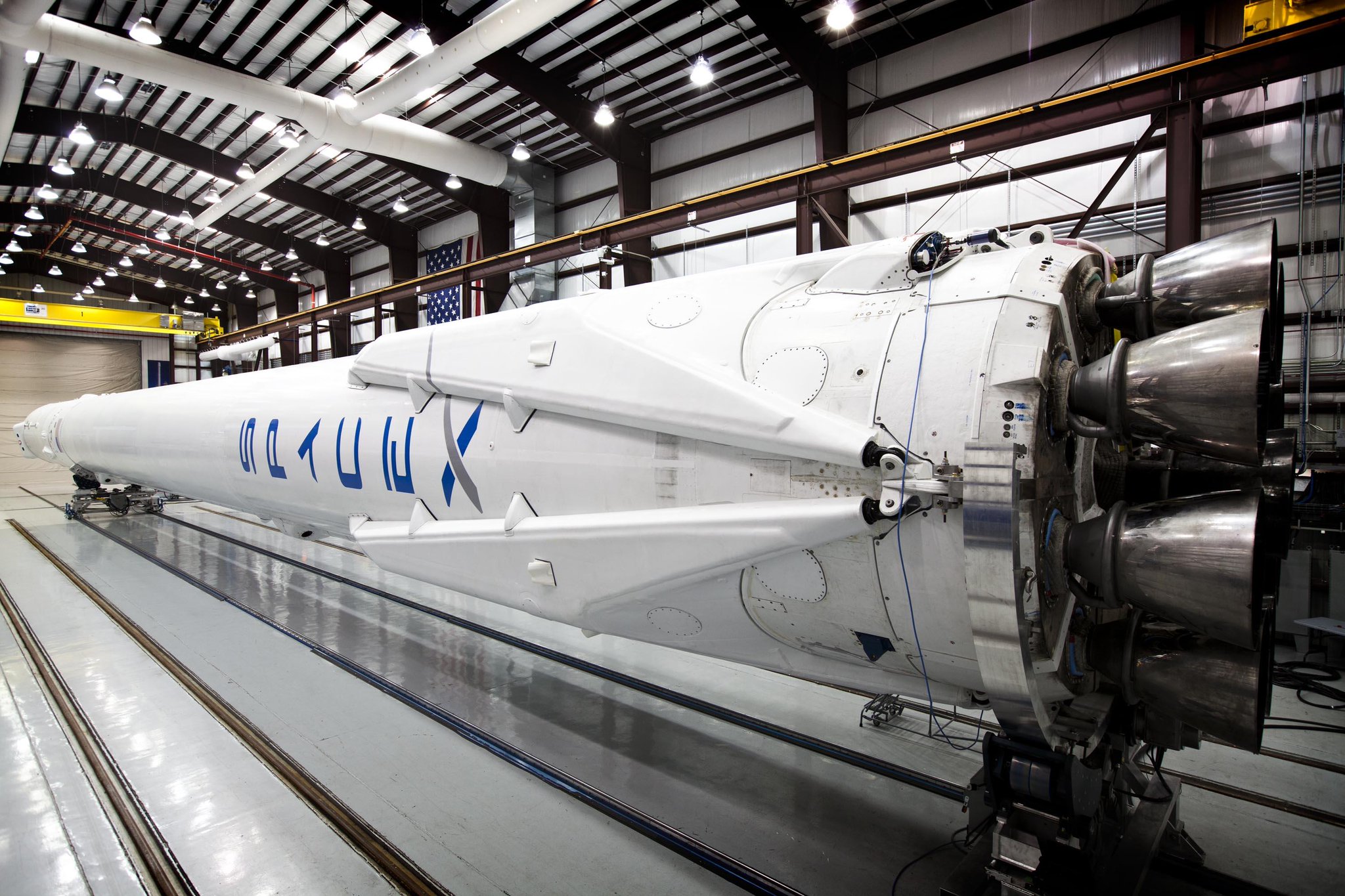
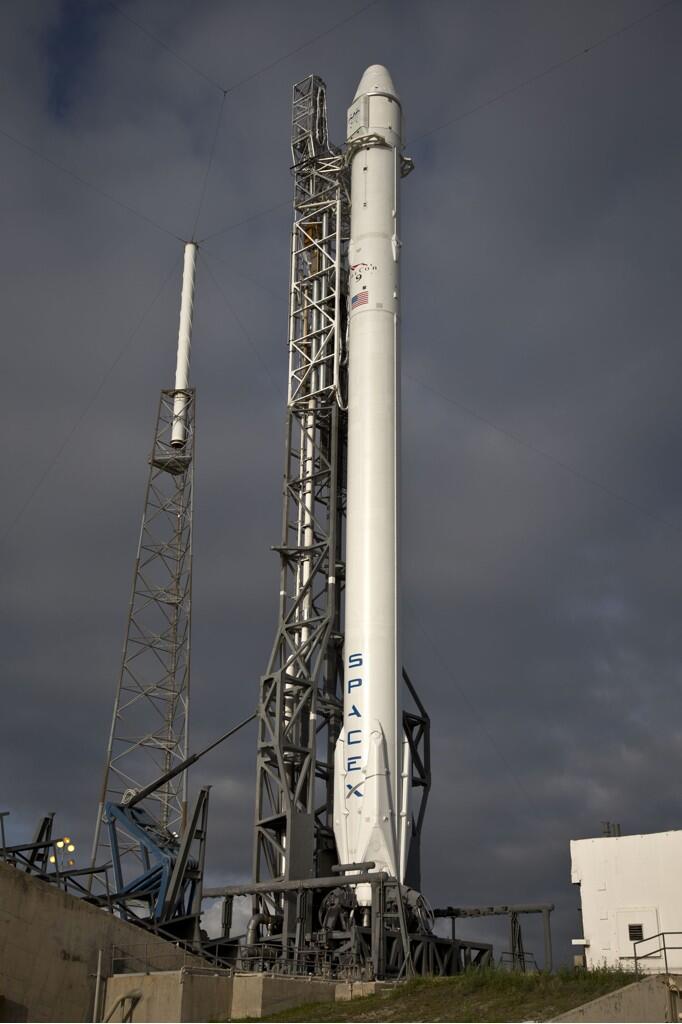

The leg frame on Grasshopper looks massively over-engineered, which is fine for a test vehicle but would be far too heavy for an actual launch vehicle. We have still to see the final leg design, and the ones in the CGI mockup video look, to my untrained eyes, very skinny. Grasshopper has proved the basics of the maneuvering and landing capability, but there's still a fair way to go.